

By Jennete Ugo Anya
Nigeria’s quest to diversify its economy away from crude oil gained a significant boost as the Nigerian Export-Import (NEXIM) Bank revealed it has disbursed about N420 billion in concessionary loans to non-oil exporters, creating more than 12,000 direct jobs and driving new investments across key sectors.
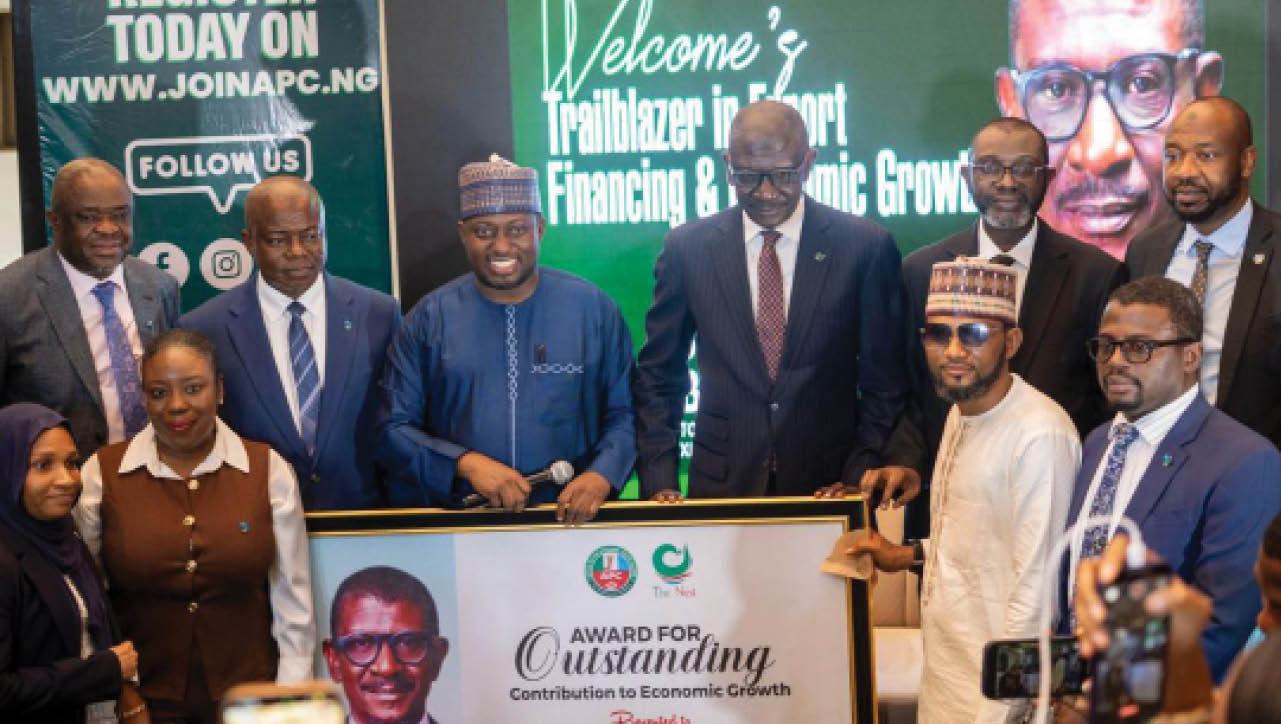
Mr. Abubakar Abba Bello, Managing Director (MD) and Chief Executive Officer (CEO) of the bank, disclosed this during an interactive session with members of the All Progressives Congress (APC) youth wing in Abuja. The forum focused on unlocking finance for small and medium enterprises (SMEs) involved in non-oil export activities.
From Single-Digit Loans to Expanding Industries
Mr. Bello explained that the bank offered the loans at a single-digit interest rate of nine percent, designed to ease access to capital for exporters who often struggle with high borrowing costs. Out of the N150 billion Export Development Fund (EDF) introduced by the Central Bank of Nigeria (CBN) in 2018, about N137 billion has already been released to NEXIM bank, he said.
Beyond the EDF, he noted that NEXIM bank had expanded its total assets to about N430 billion, most of which is dedicated to financing non-oil export activities. “All lending by the bank follows the same concessionary terms as the EDF,” Mr. Bello stated.
Reviving Shea Processing and Protecting Local Value
One of the notable interventions highlighted was in the shea industry, where Nigeria supplies up to 60 percent of global shea but lacked industrial processing plants until 2018. NEXIM bank has since financed four plants located in Ogun, Kano, and Niger States, all now operational.
However, the rapid rise of these processors faced a challenge: raw shea was being snapped up by long-established foreign buyers and moved across borders for processing. The federal government recently introduced a six-month ban on shea nut exports, which Mr. Bello described as a “strategic step to stabilise the supply chain and reduce input costs.”
He called for the ban to be extended to one year to attract more investors into local processing. “Let us not stop at shea,” he urged. “We should begin phasing out the export of unprocessed commodities across other agricultural value chains. This is how we keep jobs and wealth at home.”
Beyond Agriculture: Services, Youth, and Regional Trade
While agriculture remains central to non-oil export, NEXIM bank is also looking toward services exports, including event planning, digital outsourcing (such as call centres and accounting services), and even legal services. Mr. Bello said that the bank would support service contracts abroad as long as they assure foreign exchange inflows.
He further encouraged Nigerian firms to participate in African infrastructure projects, noting that NEXIM bank is ready to facilitate cross-border trade and help companies expand into emerging African markets.
“Youth training and partnerships to build export capacity are part of our focus,” he stated, reaffirming the bank’s commitment to boosting the services industry, which contributes about 55 percent of Nigeria’s gross domestic product (GDP) and remains the country’s largest sector.
A Call for Policy Continuity and Private Sector Collaboration
Mr. Bello emphasised that sustained engagement between financial institutions, government, and exporters is essential for growth. NEXIM bank, he said, plans to organise quarterly interactive sessions with stakeholders to bridge information gaps and build trust.
“We are keeping an open-door policy to exporters, particularly SMEs. As a trade facilitation agency, we are ready to assist in whatever capacity to make their export ambitions a reality,” he said.
With its expanding portfolio and focus on strategic interventions, NEXIM bank appears to be positioning itself as a key driver of Nigeria’s non-oil export transformation — one that could unlock new industries, create jobs, and reduce overreliance on crude oil in the years ahead.