
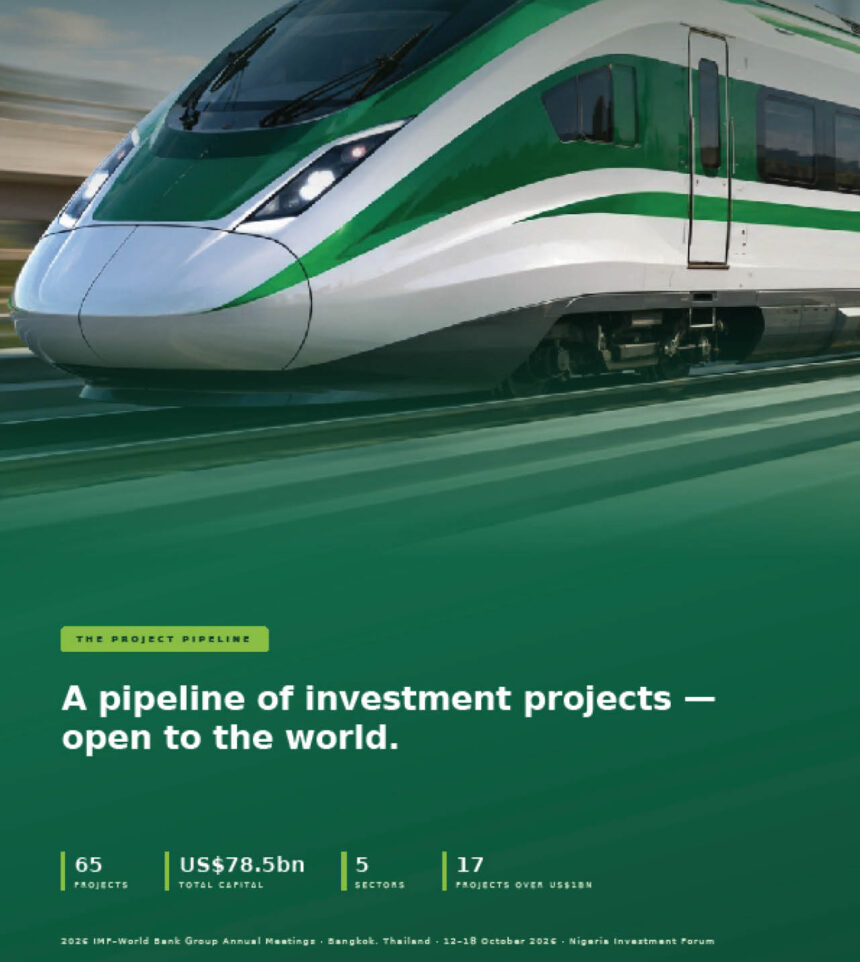
Nigeria has presented an investment pipeline worth US$78.5 billion across 65 projects, spanning energy, transport, manufacturing, agriculture and technology. The scale is significant, but the real measure of success will not be the value of projects listed in an investment directory. It will be the capital secured, infrastructure delivered, businesses expanded and jobs created. As the country seeks to attract investors, the challenge is to turn proposals into credible, financeable ventures that deliver measurable economic value. Enam Obiosio reports.
Nigeria’s search for investment has entered a critical phase. At the recent 2026 International Monetary Fund (IMF) –World Bank Group Annual Meetings in Bangkok, Thailand, the federal government’s Projects Nigeria special edition presented 65 proposed projects with a combined capital requirement of US$78.5 billion. Seventeen projects are valued at more than US$1 billion each. The portfolio offers a picture of the scale of investment Nigeria wants to attract, but it also raises a practical question: how quickly can these opportunities secure financing and move towards implementation?
The figures, compiled through the project Deal Room and published in the October 2026 edition of Projects Nigeria, cover five sectors. The publication states that project figures were submitted through the Deal Room and have not been independently verified. The portfolio should therefore be understood as a pipeline of proposed investments, not as evidence that the money has been committed or that the projects are already delivering results.
The distinction matters in an economy where growth is improving, but the conversion of economic stabilisation into productive investment remains essential.
According to the National Bureau of Statistics (NBS)’ Q2 2026 Gross Domestic Product report, cited by Financial Nigeria and BusinessDay between August and September, Nigeria’s economy grew by 4.43 percent year on year, up from 4.23 percent in the corresponding quarter of 2025. Non-oil growth stood at 4.31 percent, while crude oil production averaged 1.72 million barrels per day (mbpd).
Other indicators in the Projects Nigeria publication point to an improved macroeconomic position. Central Bank of Nigeria (CBN) reserve data reported by Nairametrics on 17 September put foreign exchange reserves at US$54.6 billion as of 14 September 2026. The publication, citing NBS inflation data reported by Voice of Nigeria (VON) in September, recorded inflation at 15.39 percent in August. It also reported a 101.8 percent rise in capital importation between January and May 2026, citing Central Bank data published by Brandicon Image in October.
These figures provide context for Nigeria’s investment pitch. They do not, on their own, establish that the economy has resolved the structural constraints that affect project financing, operating costs and investor confidence. Growth and stronger reserves can improve the investment environment, but individual projects must still demonstrate commercial viability, credible sponsors, clear regulatory pathways and realistic financing arrangements.
That is the challenge across the portfolio’s largest sectors. Oil, gas and power account for US$36.4 billion across 25 projects, while transport and maritime projects represent US$25 billion across eight projects. Industry, manufacturing and mining account for US$6.6 billion across 17 projects. Agriculture and agro-processing make up US$9.8 billion across six projects, while technology, health and urban services account for US$664.7 million across nine projects.
Energy and transport together represent US$61.4 billion, or most of the pipeline’s stated value. Their prominence reflects the scale of infrastructure required to support industrial activity, trade and economic expansion. It also concentrates a substantial share of the investment ambition in sectors where projects can require significant capital, long development periods and coordination among public authorities, financiers and private operators.
The proposed US$15 billion Ondo Modular Refinery is the largest project listed under oil, gas and power. In transport and maritime, the Strategic Deep Sea Ports programme carries a stated capital requirement of US$11.5 billion, covering proposed ports in Badagry, Ibom, Ondo, Agge and Bakassi. The National Inland Waterways programme is listed at US$10 billion, with plans involving river dredging, ports, navigation systems and fleets across eight states along the Niger and Benue basins.
Agriculture’s largest listed proposal is the One Million Hectare Tree Crops programme, valued at US$6.14 billion. In manufacturing, the Premium Steel and Mines integrated steel upgrade in Delta State is valued at US$1.255 billion. The project profile says US$150 million in sponsor equity has already been invested, with a further financing structure involving debt and new sponsor equity. Its stated production target is 2028. These details illustrate why investors need project-level information rather than headline valuations alone.
The technology, health and urban services category includes the US$355.6 million PELIA Flare-Gas AI Data Centre. Smaller projects also demonstrate the range of opportunities being presented. The Elebele Power Plant in Bayelsa State, listed at US$58 million, is described as a 60-megawatt gas-fired plant at the implementation stage. The Imo CNG Virtual Pipeline, valued at US$50 million, is listed at the planning stage. The different stages underline why the overall pipeline cannot be treated as a uniform pool of investment-ready projects.
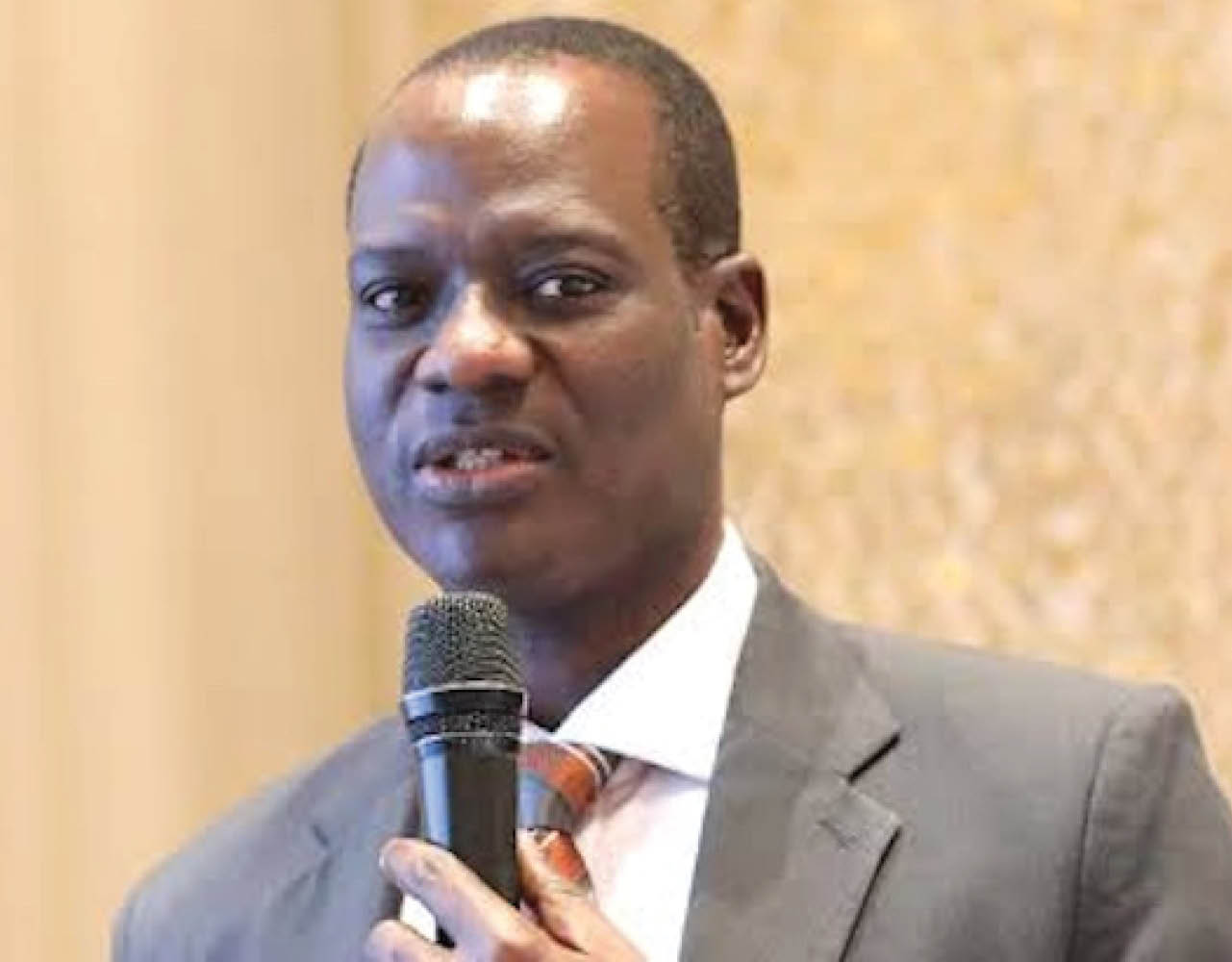
At the launch of the Nigerian Economic Summit Group’s Private Sector Outlook 2026 in Lagos on 23 April, Finance Minister and Coordinating Minister of the Economy Taiwo Oyedele said: “Reforms on their own do not create growth. We need investment at scale.” The statement, attributed in the Projects Nigeria publication to the Federal Ministry of Information and National Orientation, captures the central issue confronting the portfolio.
Investment at scale requires more than a catalogue of opportunities. It requires transparent disclosure of project status, credible feasibility studies, bankable commercial structures, clear allocation of risks and regular reporting on financing and implementation. The publication says full data-room packs, including financial information, licences and site data, are available on request. That information will be central to investors’ due diligence, alongside independent verification of project costs, approvals, sponsors and expected returns.
For the government, the next measure of progress should be the movement of projects through identifiable stages: due diligence, financial close, disbursement, construction, commissioning and operation. Reporting these milestones would help distinguish proposals from funded projects and funded projects from assets producing economic returns.
Nigeria’s US$78.5 billion pipeline sets out the scale of its investment ambition. Its credibility, however, will depend on what follows the presentation. The decisive question is not how many projects appear in the directory, but how many secure capital, reach completion and strengthen the productive capacity of the economy.