By Musa Ibrahim
Nigeria’s higher education system is entering a new phase of institutional capacity development following the approval of an additional $65 million financing package under the World Bank-supported Sustainable Procurement, Environmental and Social Standards Enhancement (SPESSE) project, a programme designed to strengthen governance standards, procurement systems, environmental management, and institutional accountability across the public and private sectors.
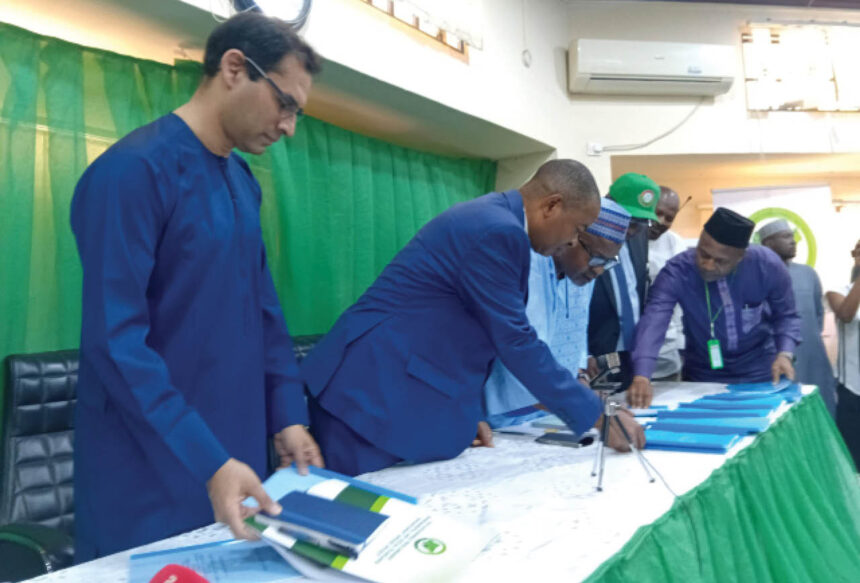
The latest funding intervention, announced during the signing of performance contracts for the new phase of the SPESSE project in Abuja, represents an expansion of a broader reform framework linking universities, governance institutions, and development agencies to specialised professional training in areas considered critical to public sector efficiency and sustainable development.
The Executive Secretary of the National Universities Commission (NUC), Abdullahi Ribadu, stated that the new funding package is expected to benefit at least 24,000 Nigerians through expanded training programmes, postgraduate education, institutional partnerships, and professional certification systems.
According to Ribadu, the intervention builds on the earlier $80 million SPESSE initiative that became operational in 2021 and was structured to address shortages of skilled professionals in procurement, environmental safeguards, and social standards management within Nigeria’s governance architecture.
“With the support of the World Bank and under the coordination of the NUC, six centres of excellence were established across the six geopolitical zones to provide sustainable capacity building in these critical sectors,” Ribadu said.
The establishment of the six centres reflected an effort to decentralise specialised professional training across the country while ensuring regional representation in the implementation of governance-related educational programmes.
The NUC explained that the participating universities emerged through a competitive selection process that evaluated institutional readiness, sustainability plans, academic quality assurance systems, and infrastructure capacity.
According to Ribadu, the selected institutions have already begun contributing to manpower development in sectors tied to procurement transparency, environmental compliance, and social governance standards.
The programme comes at a time when governance reform, procurement accountability, environmental sustainability, and institutional transparency are becoming increasingly central to development financing and public sector administration globally.
Nigeria’s public institutions have faced growing pressure in recent years to strengthen procurement processes, improve project accountability, comply with environmental safeguards, and align development projects with international governance standards, particularly within donor-supported programmes and infrastructure financing arrangements.
Within that context, the SPESSE initiative has evolved into a specialised framework connecting academic institutions directly to governance reform priorities and public sector capacity development.
Ribadu described the latest contract signing as more than an administrative exercise, stating that it represented a renewed institutional commitment to accountability, sustainability, and excellence within the participating universities and partner institutions.
He disclosed that the centres of excellence had already achieved several milestones since the project commenced, including the development of specialised academic programmes ranging from short professional courses to undergraduate and postgraduate degrees.
According to him, investments had also been made in digital learning systems, research facilities, and professional training infrastructure to support long-term sustainability of the programme.
Ribadu further revealed that three of the six centres had already commenced doctoral degree programmes, while the remaining institutions were expected to begin PhD programmes by July 2026.
Under the newly approved phase of the project, the commission is targeting at least 60 PhD graduates, the enrolment of 60 foreign students, expanded staff internship programmes, and broader student exchange partnerships with international institutions.
The focus on international exchange programmes and foreign student enrolment reflects growing efforts by Nigerian universities to strengthen global academic partnerships and improve international visibility in specialised professional education.
Also speaking during the event, the Director-General of the Bureau of Public Procurement, Adebowale Adedokun, linked the project directly to broader efforts aimed at improving procurement competence and financial governance within Nigeria’s public sector.
According to Adedokun, more than 2,700 officers from both public and private sector institutions had already received training under the programme. He stated that the next phase would support the expansion of Nigeria’s electronic procurement system while strengthening online training platforms for policymakers and small and medium-scale enterprises involved in public procurement activities.
The growing emphasis on electronic procurement reflects wider public sector reforms aimed at improving transparency, reducing administrative inefficiencies, and strengthening monitoring mechanisms in government contracting processes.
The World Bank Task Team Leader for SPESSE, Ishtiak Siddique, stated that over 40,000 participants had been trained under the original phase of the project, with more than 4,000 individuals receiving certification in procurement, environmental standards, and social governance systems.
According to Siddique, the newly approved financing package would prioritise capacity development for federal, state, and local government institutions to strengthen implementation capacity and improve development outcomes nationwide.
He also stressed that sustainability remained central to the project’s design to ensure continuity beyond external donor funding.
The sustainability component has become increasingly significant within donor-supported institutional programmes in Nigeria, particularly as development partners seek frameworks capable of maintaining long-term impact after the expiration of direct financing arrangements.
The Vice-Chancellor of the University of Lagos, Folasade Ogunsola, also reaffirmed the commitment of participating institutions to deepening professional training and institutional ownership under the SPESSE framework.