Nigeria is edging toward a new era in how it manages national wealth. The shift gained momentum last week when the Senate passed for second reading a bill that seeks to repeal the Ministry of Finance Incorporated (MOFI) Act of 1959 and re-enact a modern version to fit today’s economic realities. The bill proposes a complete overhaul of the laws guiding the Ministry of Finance Incorporated, known widely as MOFI, which holds the federal government’s investments across several sectors. Enam Obiosio writes…
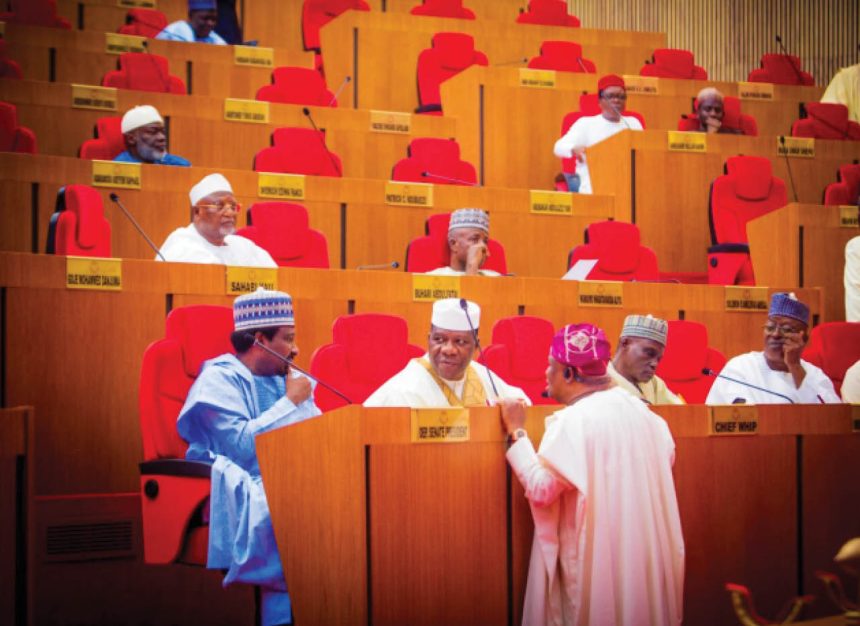
The debate at last week Wednesday’s plenary was calm yet decisive. It signalled a growing acceptance within the legislature that the structure created more than six decades ago can no longer carry the weight of a complex economy that has grown in size, diversity, and ambition. It also revealed the Senate’s willingness to move Nigeria toward a future where public assets contribute more meaningfully to national development.
The sponsor of the proposed 2025 Act, Senator Sani Musa of Niger East, set the tone when he presented the general principles of the bill. As chairman of the Senate Committee on Finance, he framed MOFI not as a curiosity from a bygone era but as a vital institution that had been underpowered for far too long. In his words, MOFI had functioned as a passive custodian with limited capacity to shape the wealth it was meant to protect. The problem, he argued, was not the institution itself. It was the outdated law behind it.
Sen. Musa explained that MOFI was established in 1959 as the government’s investment holding company. Its job was to hold federal equity in state-owned enterprises and other commercial ventures. Over time, Nigeria built roads, invested in industries, acquired stakes in corporations, and expanded its economic footprint. Yet the guiding framework for MOFI remained unchanged. As a result, he said, the company lacked the authority, governance structure, and technical capacity needed to drive investment decisions or respond to market changes.

He told his colleagues that this weakness carried a steep cost. Nigeria had been losing value from public investments because many were poorly overseen or locked in outdated ownership structures. Investments that could have been profitable became trapped in inefficiency. Some assets produced little growth because no institution had the legal strength or professional structure to optimise them. Sen. Musa said that the new bill offers a path to reverse this trend.
The senator stated that one of the major goals of the reform is to turn MOFI from a dormant entity into a dynamic institution with the tools to grow national wealth. He said that the new act would empower MOFI to invest in domestic and international markets, structure public-private partnerships, and explore financial instruments such as securitisation and bond issuance. According to him, this shift will allow Nigeria to treat its assets not as symbolic holdings but as engines of economic value.
The bill proposes a new governance model anchored by a professional board, which will operate with well-defined oversight responsibilities. Annual external audits and transparent reporting structures will be mandatory. Sen. Musa presented these changes not as bureaucratic tweaks but as fundamental steps toward building a credible investment institution that reflects best practices around the world.
He highlighted that several nations had already built strong national investment companies that generated wealth by managing assets with discipline and transparency. He cited Temasek Holdings in Singapore, valued at more than 382 billion dollars, and commended its independent board, public disclosures, and diversified portfolio. He also referenced Norway’s Sovereign Wealth Fund, valued at over 1.4 trillion dollars and regarded as the global gold standard for transparency and ethical investment. Sen. Musa said that these examples show what disciplined asset management can achieve for a nation.
He reminded his colleagues that Nigeria does not need to replicate these institutions. Instead, it must draw lessons from them and adapt those lessons to its own needs. He argued that the bill would help Nigeria move from an economy dominated by oil revenue to one where national assets play a stronger role in generating sustainable income.
His presentation received strong support from across the chamber. Senator Abdullahi Yahaya of Kebbi North described the bill as important and suggested a broader reform that would merge the MOFI Act with the Sovereign Wealth Fund Act. He said that a unified framework for managing all federal investments would reduce duplication and strengthen oversight. According to him, Nigeria’s investment structures are too scattered, and the country needs a coordinated approach to asset management.
Senator Adetokunbo Abiru of Lagos East stated that the bill was long overdue. He pointed to the absence of an accurate database of federal investments as a major weakness. He said that a country cannot manage what it does not fully know and argued that a reformed MOFI should begin by cataloguing all federal investments at home and abroad. His comments reflected a long-standing gap that several economic studies have noted. Nigeria holds stakes in many commercial entities, yet no single institution keeps a complete, up-to-date record of their performance, value, or potential.
Senator Abdul Ningi of Bauchi Central called the proposed legislation a landmark step. He said that it was striking that the current law had survived unchanged for sixty-five years, even as Nigeria moved from an agricultural economy to an oil-based one and now to a diversified services-driven environment. He argued that revising the legislation was not only timely but essential for Nigeria’s future. According to him, the country cannot afford to keep its public investments locked under an outdated legal structure.
Beyond the chamber, the bill reflects a broader shift in thinking among policymakers. For years, economists and investment experts have warned that Nigeria has not fully tapped the potential of its public investments. Many government-owned enterprises, real estate assets, infrastructure holdings, and equity stakes underperform because they are poorly governed or lack oversight. Several analysts say Nigeria’s public assets would be valued far higher if managed with a disciplined, commercial-oriented structure.
The proposed MOFI Act of 2025 aims to provide that structure. If passed, it would serve as the legal backbone for transforming MOFI into an active wealth manager. It could also help attract private capital into sectors that need long-term investment. The bill requires MOFI to channel funds into high-impact sectors such as technology, agriculture, manufacturing, and infrastructure. Musa said this approach aligns with Nigeria’s push to diversify its revenue sources and create new pathways for economic growth.
Supporters of the bill say the transformation of MOFI could influence every sector where the federal government has invested. It could help revive underperforming enterprises, identify new investment opportunities, and restructure assets to generate long-term returns. It could also support the government’s fiscal strategy by reducing dependence on borrowing while increasing internally generated revenue.
As Sen. Musa told the Senate, the future of Nigeria’s economy should not be tied solely to the rise and fall of global oil prices. He said that the new bill gives the country a chance to manage its wealth in a more stable and professional manner. He argued that when a nation builds strong investment institutions, it builds a shield against economic shocks. That shield is what the proposed MOFI reform seeks to create.
The push for transparency is also at the heart of the bill. In a country where citizens are increasingly concerned about accountability, Sen. Musa insisted that the new act would ensure clearer reporting and stronger monitoring. He said that annual audits would be compulsory. Reports would be made public. Board members would operate under defined ethical standards. These measures, he said, would help build public trust in the institution.
As the debate concluded, Senate President Godswill Akpabio referred the bill to the Committee on Finance for further examination. The committee will conduct a detailed review, consult experts, and present its findings. This next stage will determine the final shape of the legislation before it returns to the chamber for third reading and passage.
While the bill still has a long journey ahead, last week Wednesday’s vote sends a strong signal. It shows the Senate is ready to rethink how Nigeria manages its wealth. It also reflects a growing understanding that asset management is as important as revenue generation. In a global economy where nations build resilience by diversifying income sources, Nigeria’s move to strengthen MOFI may prove critical.
If the reform succeeds, MOFI will no longer sit as a silent record keeper. It will act as an engine of economic expansion. It will help drive investment, support job creation, and build value from assets that have remained stagnant for years. It will serve as a strategic player in the country’s development rather than a ceremonial holder of government shares.
For a country facing fiscal strain and rising public expectations, the new MOFI Act offers a possible path to renewal. It promises a future where national investments are managed with skill, transparency, and commercial discipline. It also offers the prospect of strengthening Nigeria’s position in a global economic environment that rewards professionalism and punishes inefficiency.
As Nigeria waits for the next steps in the legislative process, many will watch how lawmakers refine the bill. Some will look for assurances that MOFI’s new powers will be exercised responsibly. Others will focus on whether the new board structure can deliver the level of accountability promised. What remains clear is that the Senate has taken a bold step to reshape how the nation builds and protects wealth.
The Nigeria that created MOFI in 1959 is long gone. The Nigeria of today needs an institution that can manage assets, attract investment, and grow value. The Senate’s move to revive the law may be the beginning of a long journey. It may also be the moment the country begins shifting from a revenue-dependent model to an asset-driven future.