
REFORM TALKS with Enam Obiosio
One of Nigeria’s greatest economic tragedies is not the absence of resources, but the repeated failure to convert those resources into structured national wealth. For decades, the country behaved like a nation cursed by abundance, rich in minerals, rich in energy, rich in human capital, yet permanently trapped in fiscal anxiety, debt dependence and import addiction.
That is why the recent disclosure by the Minister of Solid Minerals Development, Dr. Dele Alake, that reforms in the mining sector have attracted more than $2.6 billion in investments within two years deserves far more national attention than it is currently receiving.
I do not see the announcement merely as another government performance claim. I see it as a direct challenge to Nigeria’s old economic culture, the dangerous culture of consumption without production, extraction without industrialisation and governance without economic imagination.
READ ALSO:
- Africa’s Leaders Shift Development Debate From Aid To Investment, Industrial Growth
- NAICOM Intensifies Multi-Agency Enforcement Of Nigerian Insurance Reform Framework
For too long, Nigeria treated solid minerals like abandoned potential buried beneath political laziness and institutional neglect. The country focused almost entirely on oil revenues while allowing illegal mining networks, foreign exploitation, weak regulation and policy inconsistency to define the minerals sector. The consequences were devastating.
While countries with fewer natural resources built industrial ecosystems around mining, processing and export manufacturing, Nigeria reduced itself to an economy dependent on crude oil revenues and import consumption. The result was predictable, recurring debt crises, weak foreign exchange earnings, unemployment, infrastructure decay and endless vulnerability to oil-price shocks.
I therefore find it deeply symbolic that the current administration is attempting to reposition the solid minerals sector not merely as a revenue source, but as a strategic industrial pillar.
When Dr. Alake said Nigeria was borrowing to pay salaries before 2023, he was not exaggerating. He was describing the harsh economic reality of a country that spent years financing consumption while neglecting productive expansion. Fuel subsidies consumed public resources. Recurrent expenditure dominated fiscal priorities. Capital development suffered. Economic diversification became a slogan rather than a measurable national strategy. That pattern was unsustainable.
No serious economy survives indefinitely by exporting raw commodities, importing finished products and borrowing to fund government operations. At some point, productive sectors must emerge as engines of employment, industrialisation and foreign exchange generation.
This is precisely why I consider the current mining reforms important, not because reforms automatically guarantee success, but because they represent a shift toward productive economic thinking.
The significance of attracting $2.6 billion in mining-related investments extends beyond the headline figure itself. What matters more is the direction of those investments.
For years, Nigeria exported raw mineral resources while importing refined industrial products at significantly higher value. That model kept the country trapped at the lowest end of the value chain. Wealth left the country in raw form, while jobs, technology and industrial capacity remained abroad.
What now appears to be emerging is an attempt to reverse that pattern through local processing and value addition.
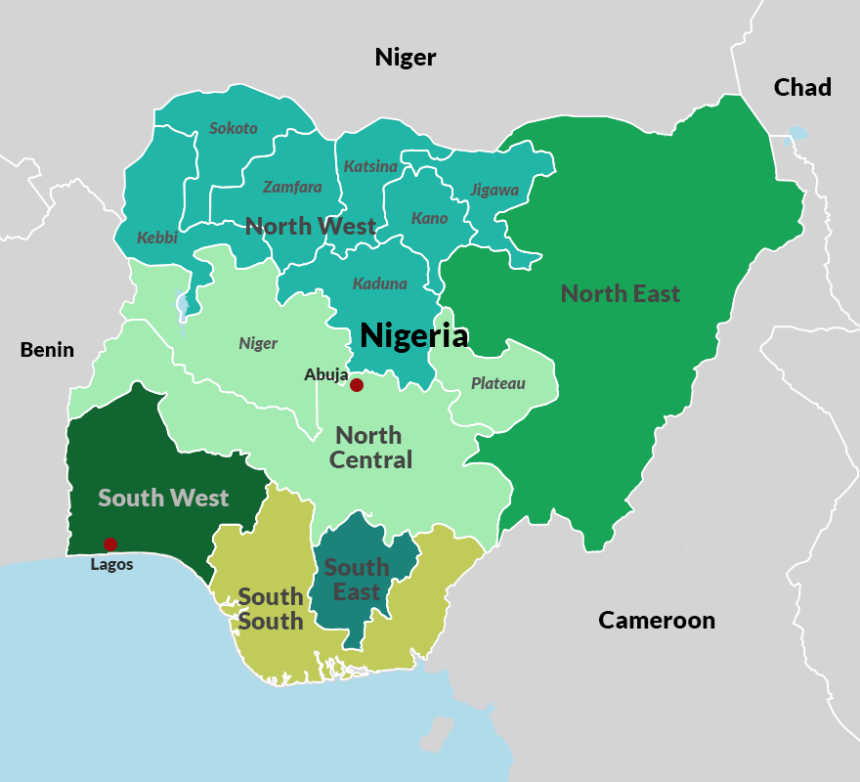
The announcement that a $600 million lithium processing factory in Nasarawa State is awaiting commissioning, alongside another $200 million lithium facility near Abuja, represents more than isolated industrial projects. To me, they symbolise the possibility of a different economic future, one where Nigeria stops functioning merely as a raw material supplier for foreign industries. That distinction matters enormously.
The global energy transition has intensified international demand for lithium and other critical minerals used in electric vehicles, batteries and renewable-energy technologies. Countries that merely export raw lithium may earn temporary revenues, but countries that develop processing capacity, manufacturing ecosystems and industrial supply chains will capture far greater long-term value. Nigeria therefore faces a historic opportunity. But I must also issue a warning.
Natural resources alone do not create prosperity. Institutions do. Governance does. Policy consistency does. Infrastructure does. Security does.
Nigeria has repeatedly failed to transform resource wealth into broad economic development because corruption, policy reversals, weak enforcement and elite capture often destroy reform momentum before industrial ecosystems mature.
This is why I consider the crackdown on illegal mining especially significant.
Dr. Alake disclosed that more than 300 illegal mining operators, including foreign nationals, have been arrested, while over 150 prosecutions are ongoing. More than 100 illegal mining sites have reportedly been recovered and returned to legitimate owners. Those numbers reveal the scale of institutional collapse that previously existed within the sector.
Illegal mining is not merely a criminal activity. It is economic sabotage. It destroys government revenue, weakens environmental standards, fuels insecurity and discourages legitimate investors. No serious investor commits long-term capital into a sector where criminal networks operate freely without enforcement consequences. I therefore see the ministry’s enforcement drive as central to investor confidence. However, enforcement alone will not be enough.
Nigeria’s mining sector still faces enormous structural obstacles. Power supply remains unreliable. Transportation infrastructure remains weak. Community conflicts continue affecting extractive operations. Regulatory inefficiencies still discourage many investors. Environmental compliance remains inconsistent. Access to geological data remains limited compared to more developed mining jurisdictions. These weaknesses cannot be ignored simply because investment announcements sound impressive.
I have seen too many Nigerian reform cycles collapse under the weight of implementation failure. Grand declarations are often easier than institutional transformation. The real test will not be the number of conferences organised or memoranda signed. The real test will be whether Nigeria can sustain investor confidence over a decade, rather than a news cycle.
I am also cautious because Nigeria has historically struggled with what economists describe as the “resource curse,” the tendency for resource-rich countries to experience corruption, weak diversification and economic volatility rather than inclusive development.
Oil wealth should have industrialised Nigeria decades ago. Instead, it often deepened dependence, encouraged rent-seeking and weakened productive capacity. The country cannot afford to repeat that mistake with solid minerals. That means local beneficiation must remain non-negotiable.
Mining cannot become another extractive enclave where foreign firms remove raw resources while local communities remain poor and environmentally damaged. Processing, refining, manufacturing and skills transfer must become embedded within Nigeria’s long-term mining framework. This is where I believe the current administration’s emphasis on value addition becomes critically important.
If properly implemented, mining reforms could support manufacturing expansion, create industrial clusters, strengthen export earnings and reduce pressure on the naira. They could also expand government revenues beyond oil dependence and create employment opportunities across engineering, logistics, construction, technology and processing industries. But achieving those outcomes requires discipline.
Nigeria cannot continue approaching economic policy through political short-termism. Investors require consistency. Industrial development requires long-term planning. Infrastructure expansion requires coordination. Mining governance requires transparency. Without those foundations, reforms eventually lose credibility. I also believe Nigerians must stop underestimating the strategic importance of minerals within the evolving global economy.
The future global economic order will not be shaped only by crude oil. It will increasingly be shaped by countries controlling critical minerals required for clean energy technologies, digital infrastructure and industrial manufacturing. Lithium, cobalt, nickel and rare earth minerals are becoming strategic geopolitical assets.
Nigeria therefore has an opportunity to reposition itself within a changing global industrial landscape, but only if the country avoids the old mistakes of resource mismanagement. I remain particularly interested in the ministry’s efforts toward formalising artisanal miners.
For years, thousands of Nigerians operated within informal mining networks lacking regulation, financing, technical support and environmental standards. Formalisation could potentially improve productivity, increase government revenues and reduce criminal exploitation within mining communities.
Still, formalisation must not become another bureaucratic slogan detached from practical realities. Small-scale miners require access to financing, equipment, training and structured market systems if formalisation is to succeed meaningfully. I also believe environmental protection must become central to mining reforms.
Nigeria cannot pursue mineral wealth while destroying water systems, agricultural land and host communities. Sustainable mining is not optional. It is economically necessary. Countries that ignore environmental standards eventually pay far higher long-term costs through ecological damage, health crises and social instability. This is why I believe the current mining transition represents both an opportunity and a test.
The opportunity is obvious. Nigeria possesses significant untapped mineral resources capable of supporting industrial growth and economic diversification. The test is whether the country has finally developed the institutional seriousness required to manage those resources responsibly.
I want Nigeria to succeed beyond oil dependency because the old model is no longer sustainable. Crude oil volatility has repeatedly exposed the fragility of mono-product dependence. The future belongs to economies capable of building diversified productive capacity. Solid minerals could become part of that future.
But I remain convinced that reforms alone are not enough. Political will must survive beyond speeches. Enforcement must survive beyond media headlines. Industrial policy must survive beyond electoral cycles. Most importantly, Nigeria must finally learn that buried resources do not create prosperity on their own. Only disciplined institutions do.