By Musa Ibrahim
Global trade depends heavily on the speed and predictability of customs processes, where even minor delays can ripple across supply chains. For importers and exporters, the efficiency of clearance procedures at ports and borders often defines cost structures, delivery timelines and overall market competitiveness.
It is against this backdrop that the Nigeria Customs Service (NCS) has been pursuing a series of reforms aimed at modernising customs administration and improving the experience of businesses that interact with the country’s trade system.
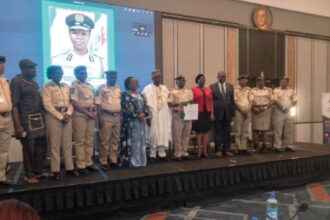
The latest indication of those efforts emerged during a two-day retreat organised by the Presidential Enabling Business Environment Council (PEBEC) for heads of Ministries, Departments and Agencies (MDAs) and reform champions in Abuja.
At the event, Nuhu Mustafa Mohamed, representing the Reform Champion of the Nigeria Customs Service Trade Facilitation Unit, outlined measures undertaken by the Service to improve operational efficiency and support business activity. According to him, the reforms have included stakeholder engagement, continuous process reviews, mystery shopping exercises and service delivery assessments across customs operations.
The initiatives contributed to the Nigeria Customs Service being recognised as one of four “Super MDAs” in the Business Environment and Enterprise Performance Accelerator (BEEPA) Report, a framework used to assess institutional performance and service delivery within the public sector.
While the recognition itself attracted attention, the broader significance lies in the direction of the reforms and what they reveal about the evolving role of customs administration in Nigeria.
Traditionally, customs agencies have been associated primarily with revenue collection and border enforcement. In recent years, however, customs administrations around the world have increasingly become central actors in trade facilitation, balancing regulatory responsibilities with efforts to improve the movement of goods across borders.
The reforms being implemented by the Nigeria Customs Service reflect this broader shift.
According to Mohamed, the Service has prioritised engagement with officers and stakeholders while placing greater emphasis on monitoring service standards and assessing user experiences through mystery shopping exercises. Such approaches are commonly used by organisations seeking to identify operational bottlenecks and evaluate how services are delivered in practice rather than solely through internal reports.
At the centre of the transformation agenda is the B’Odogwu Unified Customs Management System, a digital platform designed to support customs process management, reporting and operational interventions.
Digitalisation has become an increasingly important component of customs reform globally. Automated systems can reduce paperwork, shorten processing times, improve record keeping and provide greater transparency in transactions that previously depended heavily on manual procedures.
For traders, importers and exporters, the effectiveness of such systems can influence the speed and predictability of cargo clearance. For government agencies, digital platforms can enhance monitoring capabilities and strengthen administrative efficiency.
Under the leadership of Comptroller-General of Customs, Bashir Adewale Adeniyi, digital transformation and modernisation have been positioned as central elements of the Service’s reform programme.
The implications extend beyond customs operations alone.
Efficient customs procedures affect multiple parts of the economy. Manufacturers depend on timely access to imported raw materials. Exporters require predictable processes to meet delivery schedules. Logistics operators rely on efficient cargo movement to maintain supply chain performance. Investors often consider trade infrastructure and regulatory efficiency when assessing business environments.
As a result, customs reform is increasingly linked to broader economic competitiveness.
The recognition received under the Business Environment and Enterprise Performance Accelerator framework may therefore be viewed as part of a wider effort to align public sector performance with national economic objectives. It also reflects a growing emphasis on measuring service delivery outcomes rather than focusing solely on administrative processes.
Challenges remain. The long-term success of digital transformation initiatives often depends on consistent implementation, technology integration, staff capacity development and adaptation by users of the system. As customs operations become increasingly digitised, issues such as cybersecurity, interoperability and change management also become more important.
Nevertheless, the current reforms indicate that the Nigeria Customs Service is seeking to redefine its role within the country’s economic landscape.
Rather than functioning solely as a revenue-generating institution, the Service is increasingly positioning itself as a facilitator of trade and a contributor to efforts aimed at improving Nigeria’s business environment.
As global trade becomes more dependent on speed, efficiency and digital connectivity, the effectiveness of customs reforms may play an increasingly important role in determining how competitively Nigeria participates in regional and international markets.