

By Jennete Ugo Anya
For decades, Nigeria’s military modernisation has depended heavily on imported weapons, ammunition and specialised equipment. While foreign procurement has enabled the Armed Forces to respond to immediate security challenges, it has also exposed the country to supply chain disruptions, foreign exchange pressures and long delivery timelines that can affect operational readiness.
Increasingly, however, Nigeria is seeking to redefine that model by expanding domestic defence manufacturing and positioning indigenous production as a strategic pillar of national security.
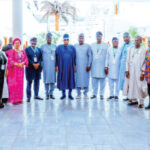
That objective received renewed emphasis during a visit by the Chief of Defence Staff, General Olufemi Oluyede, to the Defence Industries Corporation of Nigeria (DICON) Ordnance Factory in Kaduna, where he reaffirmed the Armed Forces’ commitment to strengthening local production of military equipment.
The visit went beyond a routine inspection of military facilities. It underscored a broader shift in defence policy, one that increasingly views domestic manufacturing not only as an industrial ambition but as an essential component of national resilience.
During the visit, General Oluyede inspected production and research facilities and received detailed briefings on DICON’s manufacturing capacity, ongoing projects and future expansion plans.
His assessment reflects growing confidence that Nigeria’s defence industry can play a larger role in supporting military operations at a time when security challenges continue to evolve across multiple theatres.
The Chief of Defence Staff commended the management and staff of DICON for their efforts to advance indigenous defence technology, describing local innovation as critical to the country’s long-term security objectives.
“Nigeria will continue to strengthen local production of military equipment to boost the operational effectiveness of the Armed Forces and reduce dependence on foreign defence hardware,” Oluyede said.
His remarks capture a strategic calculation that extends beyond defence procurement.
Modern military capability increasingly depends not only on acquiring equipment but also on maintaining, repairing and replenishing it quickly during periods of operational demand. Countries that rely almost entirely on imports often face delays arising from international procurement processes, export controls or geopolitical considerations.
Building domestic manufacturing capacity therefore strengthens military preparedness by improving supply reliability and reducing vulnerability to external disruptions.
General Oluyede also identified important economic benefits associated with expanding local defence production.
“Increased local production would enhance operational readiness, conserve foreign exchange and guarantee sustainable logistics support for the Armed Forces,” he stated.
The foreign exchange dimension has become increasingly significant.
Military hardware constitutes one of the most capital-intensive components of government expenditure. Greater domestic production offers the potential to reduce import dependence, retain more value within the national economy and stimulate industrial capabilities that extend beyond the defence sector.
Many technologies developed for military applications eventually find civilian uses in manufacturing, engineering, communications and advanced research.
For Nigeria, strengthening DICON could therefore generate broader industrial spillovers while supporting national technological development.
The renewed emphasis on indigenous manufacturing also aligns with wider government efforts to increase local content across strategic sectors of the economy.
Just as domestic refining, pharmaceutical production and agricultural processing have become national priorities, defence manufacturing is increasingly viewed as part of a broader agenda to build productive capacity and reduce reliance on external suppliers.
Achieving that ambition, however, requires sustained investment in research, engineering expertise, quality assurance and partnerships between government, academia and the private sector.
Recognising those requirements, the Chief of Defence Staff reaffirmed Defence Headquarters’ commitment to supporting DICON’s ongoing transformation.
“Defence Headquarters remains committed to supporting DICON’s transformation into a modern defence manufacturing institution capable of meeting the equipment needs of the military and other security agencies,” Oluyede said.
His commitment highlights an important reality.
Successful defence industrialisation depends not merely on expanding factory output but on creating an ecosystem that encourages continuous innovation, technology transfer and skilled workforce development.
General Oluyede therefore stressed that indigenous research and innovation must remain central to Nigeria’s long-term defence strategy.
“Promoting innovation and indigenous research remains key to achieving Nigeria’s defence industrialisation objectives,” he said.
That objective reflects a broader understanding of national security in the twenty-first century.