By Jennete Ugo Anya
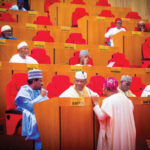
The Senate’s decision to summon the Federal Ministry of Finance and the Nigerian National Petroleum Company Limited (NNPCL) over findings in the 2021–2023 Oil and Gas Sector Audit Report has brought renewed attention to the question of how Nigeria accounts for revenue from its petroleum industry.
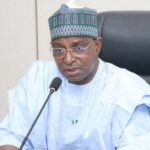
The summons was issued by the Senate Public Accounts Committee following its interrogation of the Permanent Secretary of the Federal Ministry of Finance, Raymond Omachi, over financial queries raised by the Nigeria Extractive Industries Transparency Initiative (NEITI).
The committee wants both institutions to appear together next Monday, particularly because several of the questions raised require information from agencies involved directly in the transactions.
One of the most significant issues concerns $722.6 million reportedly paid by Nigeria LNG Limited (NLNG) to NNPCL in 2021 as dividends and interest earned by the Federation.
According to the audit findings presented to the committee, the money was neither remitted to the Federation Account nor adequately accounted for. The issue raises questions about the movement and documentation of public petroleum revenues.
Another concern relates to Nigeria’s local refineries. The NEITI audit questioned why the refineries were not operational in 2021 despite approximately N200 billion reportedly spent on them.
The committee also sought clarification on $221.283 million in overhead costs incurred by the National Petroleum Investment Management Services (NAPIMS) during the same year.
The Finance Ministry’s response pointed to gaps in records and institutional responsibility.
Omachi told the committee that the ministry was not directly involved in every transaction covered by the audit and that relevant agencies, particularly NNPCL, had not supplied sufficient records.
“We don’t have direct involvement in all the issues raised and the required financial records from the affected agencies, particularly NNPCL.”
The Permanent Secretary said the ministry had engaged Arthur Andersen LLP to undertake a forensic audit of the transactions and assist with reconciliation.
He also indicated the ministry’s willingness to return with the agencies concerned to provide further explanations.
“We in the Ministry of Finance are ready to come and sit with them here so that you can hear directly from them to obtain the necessary explanations and clarifications.”
For the committee, however, the absence of complete records reinforces the need for the agencies directly connected to the transactions to appear.
Committee Chairman, Senator Ibrahim Dankwambo, representing Gombe North, insisted that NNPCL should attend the same session as the Finance Ministry. He said this would allow lawmakers to examine the issues from the relevant institutional perspectives rather than relying on incomplete information.
The committee chairman also stressed the wider significance of the audit findings, noting that the issues were attracting international attention.
“If there are records or issues that need to be clarified and properly put in order, we should do so in the interest of our country. All of us have no other country except Nigeria,” Dankwambo said.
The Senate’s intervention does not, by itself, establish wrongdoing in the transactions under review. Rather, it places the affected institutions under scrutiny to explain how public funds were received, transferred, recorded and accounted for.
The forthcoming appearance of the Finance Ministry and NNPCL will therefore be important for establishing the documentary trail behind the queried transactions.
Beyond the individual figures, the proceedings highlight a continuing challenge for Nigeria’s petroleum economy: ensuring that revenues generated from natural resources can be traced clearly through the institutions responsible for collecting, managing and remitting them.
The committee’s next session is expected to provide further explanations on the NEITI findings and determine what additional action may be required to resolve the outstanding queries.