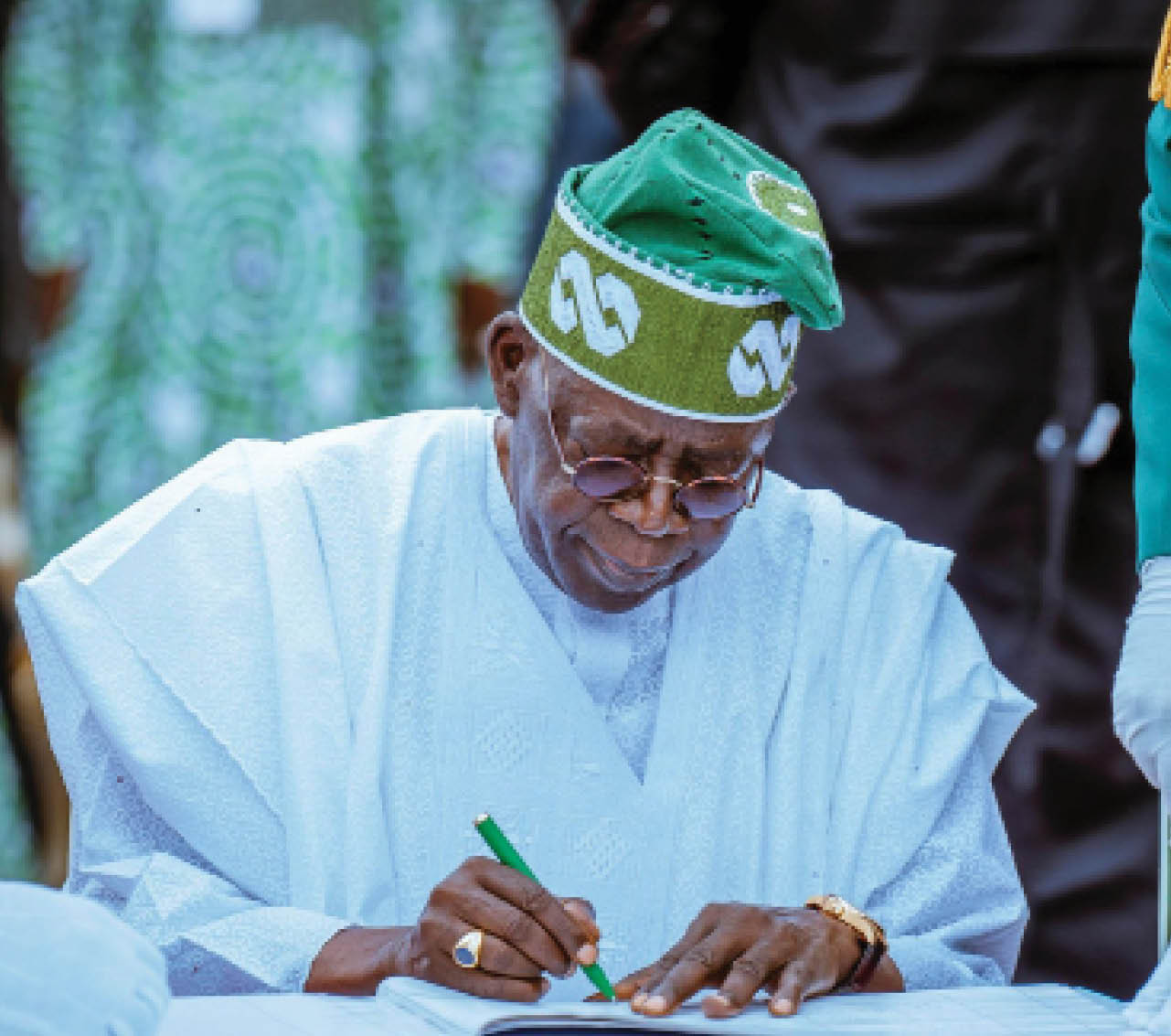
President Bola Ahmed Tinubu
President Bola Ahmed Tinubu’s landmark deep offshore investment framework could determine whether Nigeria finally converts its offshore oil potential into investment, jobs, industrial capacity and broader economic value. Enam Obiosio examines.
For years, Nigeria’s deep offshore oil industry has carried an awkward contradiction. The country has some of Africa’s most significant petroleum resources, yet some of the largest and most technically demanding projects have remained trapped between commercial ambition, regulatory uncertainty and the long wait for investment decisions to become bankable.
That contradiction is now being confronted with a different kind of policy response. President Bola Ahmed Tinubu’s recent approval of a new Deep Offshore Oil and Gas Projects Incentives (Tax Remission) Order, 2026, is designed to change how Nigeria competes for the vast pools of capital required to develop fields far from the coastline.
The headline figure is striking: the federal government says the framework could unlock up to US$50 billion in new deep offshore investment. Its first major beneficiary is expected to be the approximately US$10 billion Bonga South West project, a development that has become emblematic of Nigeria’s difficulty in converting proven offshore potential into actual production, industrial activity and jobs.
But the significance of the decision goes beyond Bonga South West. The more consequential change is that government is attempting to move away from negotiating incentives separately for individual projects and towards a common framework under which qualifying investments can understand, in advance, the conditions under which they may receive tax relief. For investors, that distinction matters.
Large offshore developments are not financed on optimism alone. They require enormous upfront expenditure, long project cycles, sophisticated engineering, complex contracting and confidence that the fiscal and regulatory environment will remain sufficiently predictable for the life of the investment. Every additional layer of uncertainty can affect financing costs, investment timing and, ultimately, whether a project proceeds.
The new framework therefore addresses a problem that is familiar beyond the petroleum sector: Nigeria may possess attractive assets, but the quality of the investment proposition depends heavily on the rules surrounding those assets.
A Nation at Economic Crossroads
The story of President Bola Ahmed Tinubu’s first three years in office is increasingly defined by a willingness to con-front structural economic challenges that many previous administrations had avoided.
When Tinubu assumed office on May 29, 2023, Nigeria faced mounting fiscal pressures, declining revenues, growing debt-servicing obligations, exchange-rate distortions, widespread insecurity and weakening investor confidence. Ac-cording to the president, these challenges had combined to place the country on a dangerous economic path that threatened long-term stability and growth.
Addressing the nation during the third anniversary of his administration, Tinubu argued that Nigeria had reached a point where difficult decisions were no longer optional but necessary for national survival.
The Courage to End Costly Subsidies
Among the most consequential decisions of the administration was the removal of fuel subsidies, a policy that had consumed vast public resources for years.
Tinubu disclosed that Nigeria was spending as much as N18.4 billion daily on petrol subsidies, with the annual bur-den exceeding N4 trillion in 2022 alone. Such expenditure, he argued, deprived critical sectors such as healthcare, education, housing and infrastructure of resources needed for development.
For the administration, ending the subsidy regime was not simply an economic adjustment but a strategic decision aimed at restoring fiscal sustainability and redirecting national resources toward productive investments.
Exchange Rate Reform and Market Confidence
Another defining pillar of the administration’s economic agenda was the unification of the foreign exchange market.
According to Tinubu, the multiple exchange-rate system inherited by his government encouraged speculation and market distortions that cost the economy more than N8 trillion within three years. The administration’s reforms sought to eliminate inefficiencies, improve transparency and restore confidence in Nigeria’s financial system.
While the transition created short-term pressures, government officials maintain that the reforms have strengthened the credibility of the economy and improved investor sentiment.
Capital Market Records Historic Expansion
One of the clearest indicators cited by the administration is the remarkable performance of the Nigerian capital mar-ket.
Tinubu revealed that the All Share Index rose from approximately 53,000 points in 2023 to 250,000 points in 2026. Over the same period, market capitalisation expanded from N30 trillion to N160 trillion.
The administration views this growth as evidence that investors increasingly believe in Nigeria’s economic direction and the government’s commitment to reform-driven development.
Infrastructure Drive Gains Momentum Nationwide
Infrastructure development has emerged as a central component of the administration’s economic strategy.
According to the president, more than 2,700 kilometres of highways and major roads are currently under construc-tion, rehabilitation or reconstruction across the country. These projects are expected to improve connectivity, facili-tate commerce and support broader economic expansion.
Rail modernisation initiatives are also advancing, reflecting the administration’s objective of building an integrated transportation network capable of supporting industrial growth and regional development.
Reviving Nigeria’s Energy Future
The administration’s reform programme has also focused heavily on restoring confidence in the energy sector.
Tinubu noted that policy reforms have attracted fresh investments from international oil companies and strength-ened Nigeria’s position as a leading energy producer. Among the most significant developments is the near comple-tion of the $5 billion NLNG Train 7 project, which is expected to expand the country’s liquefied natural gas export ca-pacity substantially.
The government believes these investments will generate revenue, create jobs and strengthen Nigeria’s influence within global energy markets.
Domestic Refining Begins a New Chapter
For decades, Nigeria’s dependence on imported petroleum products remained a major economic challenge.
Tinubu highlighted the emergence of operational large-scale and modular refineries as one of the administration’s major achievements. Increased domestic refining capacity is helping reduce import dependence, improve energy se-curity and conserve foreign exchange.
The development represents a significant step toward achieving greater self-sufficiency within the petroleum sector.
Power Sector Transformation Takes Shape
Recognising the importance of electricity to economic development, the administration has intensified efforts to ad-dress longstanding structural weaknesses within the power sector.
Government investments in transmission infrastructure, renewable energy projects and grid expansion are designed to support industrialisation and improve electricity access for businesses and households.
These interventions form part of a broader strategy to strengthen productivity and unlock economic opportunities nationwide.
Agriculture at the Heart of Food Security
Agriculture remains central to the administration’s vision for economic resilience and food security.
The president disclosed that millions of farmers have benefited from government-supported interventions involving improved seedlings, fertilisers, mechanisation and irrigation support. These initiatives are intended to increase agri-cultural productivity, boost rural incomes and reduce food supply challenges.
Expanding Educational Opportunities Through NELFUND
Education has become a major area of intervention under the Renewed Hope Agenda.
Through the Nigerian Education Loan Fund (NELFUND), more than 1.5 million students have reportedly received support, with over N282 billion disbursed to facilitate access to higher education.
The programme seeks to remove financial barriers to education and equip more Nigerians with the skills required for future economic growth.
Renewed Hope Cities and Housing Development
The administration has also intensified efforts to address housing deficits while stimulating economic activity.
Major housing projects are progressing in Abuja, Lagos and Kano under the Renewed Hope Cities initiative. At the same time, the CREDICORP programme is expanding access to consumer credit for workers and families.
Together, these initiatives are expected to support job creation, wealth generation and improved living standards.
Strengthening Healthcare and Human Capital
Healthcare reforms have focused on revitalising primary healthcare centres and expanding insurance coverage for vulnerable Nigerians.
The administration believes stronger healthcare systems are essential to building a productive workforce and im-proving quality of life across the country. Thousands of healthcare facilities are being upgraded as part of efforts to strengthen access to essential medical services.
Investing in Nigeria’s Youth and Digital Future
Recognising the importance of youth participation in national development, the administration has prioritised in-vestments in digital skills, innovation, technical education and entrepreneurship.
Tinubu assured young Nigerians that government programmes are being designed to prepare them for opportunities within a rapidly evolving global economy.
The objective is to transform Nigeria’s youthful population into a powerful driver of economic growth and competi-tiveness.
Security Operations Restore Confidence
Security remains a critical priority of the administration.
According to the president, security agencies have intensified operations against terrorists, kidnappers, bandits, oil thieves and other criminal networks. Investments in surveillance technology, intelligence gathering, logistics and inter-agency coordination are helping strengthen national security capabilities.
While challenges remain, the administration maintains that progress is being recorded in restoring safety to commu-nities and key economic corridors.
From Economic Stabilisation to National Renewal
As the administration enters its fourth year, its focus is shifting from economic stabilisation toward broad-based prosperity.
Tinubu argues that the difficult reforms undertaken since 2023 have laid the foundation for sustainable growth, stronger public finances and renewed investor confidence. The next phase of governance, he says, will centre on ensuring that these gains translate into lower food prices, reduced transportation costs, expanded employment op-portunities and improved living standards for ordinary Nigerians.
For supporters of the administration, the first three years represent a period of bold leadership and transformative decision-making. In their view, the reforms have not only rescued Nigeria from looming fiscal distress but have also positioned the country for a future defined by stability, growth and renewed national confidence.
President Tinubu captured the underlying philosophy when he said: “The countries that attract long-term investment are not necessarily those with the greatest natural resources. They are the ones that provide the greatest certainty.”
That observation places the reform within the broader economic argument of the Tinubu administration. Nigeria is seeking to reposition itself not simply as a country with oil and gas reserves, but as a jurisdiction capable of providing the institutional clarity needed to attract capital that can move elsewhere.
Rather than limiting the response to one company or one project, the President’s directive was converted into an investment architecture intended to apply across qualifying categories of deep offshore developments.
Project-specific bargaining can solve an immediate problem, but it can also create uncertainty for other investors who do not know whether similar concessions will be available to them. A rules-based framework creates a more legible market. Investors can assess eligibility against defined criteria, understand the implementation process and incorporate the available incentives into their commercial calculations.
Deep offshore projects can generate production and government revenues, but their economic footprint can extend through engineering, fabrication, marine transportation, logistics, technical services, procurement and project management.
Olu Arowolo-Verheijen, the President’s Special Adviser on Oil and Gas, emphasised this domestic industrial dimension. She said: “The objective is not only to increase investment and production, but also to create skilled jobs, deepen local supply chains and position Nigeria as Africa’s regional hub for deep offshore project execution.”
The new framework explicitly seeks to maximise execution within Nigeria wherever commercially and technically feasible. That requirement introduces a second layer to the reform. It connects investment attraction with local industrial capability, suggesting that the government wants offshore development to become an economic ecosystem rather than an isolated extraction exercise.
Implementation will also depend on institutional coordination. The federal government said that the framework was developed through an extensive inter-agency process involving the Presidency, fiscal, legal, commercial and regulatory institutions, alongside industry operators.
President Tinubu specifically commended the Federal Ministry of Justice, the Federal Ministry of Finance, the Federal Ministry of Petroleum Resources, the Nigeria Revenue Service, NNPC Limited, the Nigerian Upstream Petroleum Regulatory Commission, the Nigerian Content Development and Monitoring Board, investing partners and other stakeholders for their contributions.
The role of NNPC Limited will be particularly important. As the government’s nominated counterparty under the Production Sharing Contracts, it has been enabled to proceed with the amendments to eligible contracts required to implement the framework.
There is, however, a difference between announcing certainty and sustaining certainty. Investors will ultimately judge the reform by implementation. Eligibility must be transparent, approvals must be timely, contractual amendments must be predictable, and the fiscal treatment must remain credible. The success of the framework will therefore depend as much on administrative discipline as on the attractiveness of the incentive itself.
The broader context is Nigeria’s continuing search for productive investment capable of strengthening public revenues and creating economic opportunities without relying exclusively on crude oil exports. Deep offshore development can contribute to that objective, but only if investment translates into production, domestic business participation, employment, technology transfer and durable fiscal returns.
In a release by Mr. Bayo Onanuga, Special Adviser to the President on Information and Strategy, the government in the policy itself reflects a much wider institutional undertaking. It presents the reform not as an isolated concession to an oil company, but as an attempt to establish a repeatable framework for capital-intensive offshore development.
If successfully implemented, the framework could improve Nigeria’s competitive position for globally mobile capital at a time when energy companies have numerous jurisdictions from which to choose. It could also revive projects whose economics have been weakened by delays, uncertainty or changing investment priorities.
The ultimate measure will be whether investment produces jobs, whether Nigerian businesses secure contracts, whether technical capabilities improve and whether petroleum resources generate visible public value.
For government, the challenge is to ensure that the incentives do not become an end in themselves. Tax remission is justified only if the investment, production, employment and wider economic benefits generated are sufficient to create greater national value over time.
That makes the deep offshore framework a test of a broader proposition in Nigeria’s economic reform programme: whether better rules can convert natural endowment into investable opportunity, and whether investable opportunity can then be converted into broad-based economic value.
The potential US$50 billion figure is therefore best understood not as money already committed, but as the scale of investment opportunity the government hopes to make commercially viable. The US$10 billion Bonga South West project provides the immediate reference point. Its progress will offer an early indication of whether the new architecture can translate policy certainty into actual capital deployment.
Nigeria has spent decades discussing the need to attract investment. The more difficult task has always been creating conditions under which investors can commit large amounts of capital with confidence, while ensuring that the resulting economic activity benefits the country beyond the extraction site.
The new deep offshore framework attempts to address both sides of that equation. Its promise is not simply more oil production. It is the possibility of turning offshore resources into a more predictable investment market, a deeper industrial base and a stronger domestic value chain.