By Jennete Ugo Anya
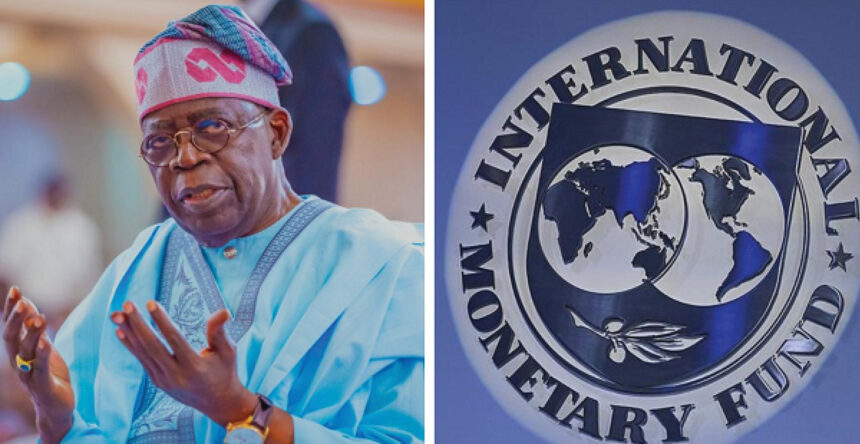
The International Monetary Fund (IMF) has called Nigeria and other major African economies to deepen fiscal, monetary, financial and governance reforms to strengthen macroeconomic stability and create the conditions for more inclusive and sustainable economic growth.
The call formed part of the fund’s latest assessment of reform priorities across the eight largest economies in the African Union, where it identified fiscal reforms as a high priority in all but one of the countries reviewed.
For Nigeria, the IMF highlighted the need to improve tax policy, revenue administration, public financial management and spending efficiency, while also strengthening the monetary policy framework and its transmission to the wider economy.
The fund further identified governance reforms as critical, particularly through greater fiscal transparency, stronger public financial management and improved anti-corruption practices.
The IMF said implementing the recommendations would help African economies strengthen their domestic institutions while creating greater capacity to finance development.
“Adopting these recommendations can help support strong, sustainable, balanced, and inclusive growth by mobilizing domestic revenue and strengthening macroeconomic institutions,” the Fund stated.
For Nigeria, the recommendations come against the backdrop of an ongoing economic reform programme by the federal government aimed at improving revenue mobilisation and simplifying the country’s tax system.
The new tax framework, which took effect in January 2026, introduced the Nigeria Tax Act, Nigeria Tax Administration Act, Nigeria Revenue Service (Establishment) Act and Joint Revenue Board (Establishment) Act.
The reforms seek to eliminate duplicate taxes, harmonise tax administration, improve compliance and reduce the burden on smaller businesses.
However, the IMF’s call for stronger fiscal reforms comes as businesses continue to raise concerns over multiple taxes and government levies.
The Central Bank of Nigeria (CBN)’s July 2026 Business Expectations Survey showed that 70.8 percent of respondents identified high and multiple taxation as the biggest constraint to business operations. Insecurity and high interest rates followed among the major concerns.
This suggests that while tax reform has moved forward at the policy level, implementation remains an important test for the government, particularly in ensuring that revenue mobilisation does not undermine business activity and private-sector investment.
The IMF also called for stronger monetary policy frameworks and transmission in Nigeria, Egypt and Ethiopia.
Nigeria’s recommendation comes after an aggressive monetary tightening cycle undertaken by the CBN in response to elevated inflation, liquidity pressures and foreign exchange market instability.
Following the appointment of Mr. Olayemi Cardoso as CBN Governor in 2023, the apex bank adopted tighter monetary and liquidity conditions alongside foreign exchange reforms designed to restore market confidence and strengthen macroeconomic stability.
The Monetary Policy Rate (MPR) stood at 18.75 percent in 2023 before a series of increases began in 2024. The benchmark rate rose to 22.75 percent in February 2024 and reached 27.5 percent by the end of that year.
The CBN also tightened liquidity conditions through changes to banks’ Cash Reserve Ratio (CRR), raising it from 32.5 percent to 45 percent in early 2024 and subsequently to 50 percent.
The tightening cycle has since shifted towards gradual easing as inflationary pressures moderated and economic conditions improved.
However, debate continues over how quickly monetary conditions should be relaxed. Presidential aide, Mr. Tope Fasua , has called for a rethink of the tight monetary policy stance, arguing that prolonged high interest rates could constrain economic growth without necessarily delivering the desired reduction in inflation.
The IMF’s latest recommendations also reinforce the importance of governance and fiscal transparency as Nigeria seeks to make its reforms durable.
Greater transparency in public finances, more efficient spending and stronger institutional controls could improve confidence in government policy while ensuring that increased revenue translates into better public services and infrastructure.
The fund’s intervention follows previous cautions over Nigeria’s approach to sovereign financing. In June, the IMF raised concerns about Nigeria’s plan to raise up to $5 billion through a derivatives-based financing arrangement with First Abu Dhabi Bank.
The fund warned that derivative-based sovereign financing could expose countries to significant risks because the terms and potential obligations can be difficult to assess.
Nigeria has continued to pursue alternative sources of financing for infrastructure and development. In December, the federal government secured about $1.2 billion in financing from the United Arab Emirates to support construction of a key segment of the Lagos-Calabar Coastal Highway.
For Nigeria, the IMF’s latest message therefore comes at a critical stage of the reform programme. The government has already undertaken significant changes in taxation, monetary policy and foreign exchange management. The next phase will require strengthening the institutions that implement those reforms.
The challenge is to ensure that fiscal reforms increase government capacity without placing excessive pressure on businesses, while monetary reforms support price stability without suppressing productive investment.