
By Jennete Ugo Anya
Nigeria’s banking sector may have emerged from the latest recapitalisation exercise with stronger balance sheets, but the Nigeria Deposit Insurance Corporation (NDIC) has warned that bigger capital buffers alone will not guarantee financial stability.
The corporation said banks must combine stronger capital positions with effective risk management, regulatory compliance and sound corporate governance if the fresh capital is to translate into sustainable growth rather than create new vulnerabilities.
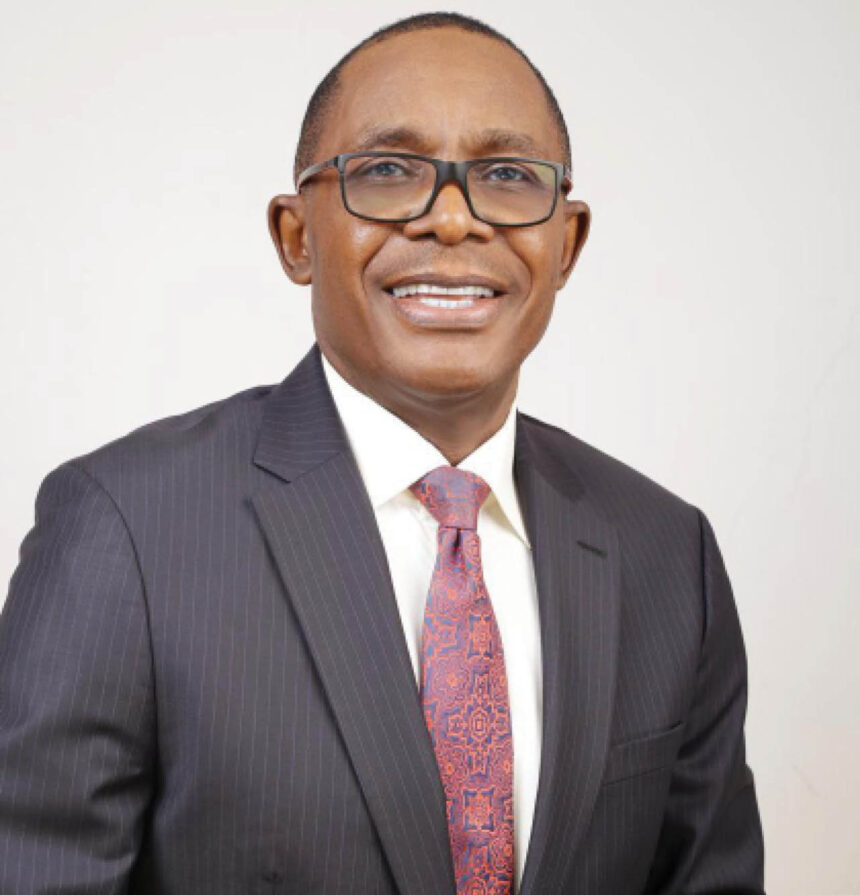
The NDIC Managing Director and Chief Executive Officer, Mr. Thompson Oludare, gave the warning in Lagos at a three-day workshop for senior management and executive staff of the Corporation, organised in collaboration with the Bureau of Public Procurement (BPP).
The workshop, themed ‘Driving Excellence through Transparency, Compliance, and Efficiency,’ came shortly after the banking industry’s recapitalisation deadline of March 31, which saw banks work to meet higher capital requirements set by the Central Bank of Nigeria (CBN).
Mr. Oludare described the recapitalisation as a significant development for financial-system resilience but stressed that raising capital was only the beginning.
“Capital is a very important aspect in banking,” he said, adding that regulators and examiners were equally concerned about “risk management, compliance and governance.”
His message is particularly relevant as banks begin to deploy the additional capital into lending, investments, technology and business expansion. According to the NDIC chief, the quality of that deployment will determine whether recapitalisation strengthens the banking system over the long term.
Banks, he said, must demonstrate that the additional funds are being applied prudently and in ways that reinforce institutional resilience rather than simply increasing their financial capacity.
The warning also comes against the backdrop of the NDIC’s continuing responsibility for resolving failed financial institutions and protecting depositors.
The corporation is currently handling the liquidation of 46 microfinance banks whose operating licences were revoked by the CBN on July 1. As official liquidator, the NDIC has commenced verification and payment of insured deposits to eligible customers.
Mr. Oludare said the corporation had already begun paying verified depositors, with the process supported by Bank Verification Numbers (BVN) and alternative bank accounts.
The approach is designed to reduce the burden on depositors by allowing verified customers to receive their insured funds without necessarily visiting NDIC offices.
The NDIC chief stressed that licence revocation remained the last resort available to regulators. Before reaching that stage, authorities could deploy resolution options including purchase-and-assumption arrangements, bridge banks, financial support and changes in management.
“Revocation of licence is the last thing that we consider, and we do not take those things lightly,” he said.
He explained that the affected microfinance banks had failed to meet conditions attached to their operating licences, leaving revocation as the most viable resolution option in the circumstances.
The experience of Heritage Bank further illustrates why preventing bank failure remains preferable to managing its consequences.
The CBN revoked Heritage Bank’s licence on June 3, 2024, after which the NDIC commenced liquidation and payment of insured deposits. The Corporation has since continued recovering assets, realising investments and pursuing debtors to generate funds for depositors whose balances exceeded the statutory insurance limit.
NDIC records show that it declared a first liquidation dividend of N46.6 billion in April 2025 and a second dividend of N24.3 billion in January 2026. The cumulative liquidation dividend reached 14.4 kobo for every N1 outstanding balance above the insured limit.
Mr. Oludare said the corporation would continue selling recovered assets and pursuing outstanding debts to generate additional funds. Some assets, however, remain tied up in legal disputes, potentially slowing the recovery process.