
By Jennete Ugo Anya
The federal government has launched a five-year strategic plan to eliminate lead poisoning in Nigeria, warning that an estimated 80 million children are exposed to the toxic substance and face potentially serious, long-term health consequences.
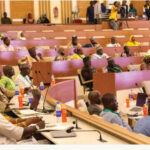
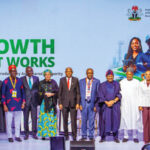
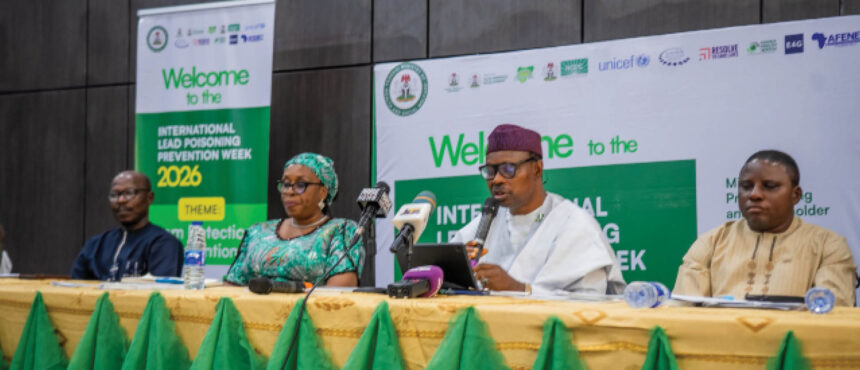
Minister of State for Health and Social Welfare, Dr. Iziaq Salako, announced the plan at a ministerial briefing and stakeholders’ dialogue in Abuja to mark the 2026 International Lead Poisoning Prevention Week.
Salako said the strategy would prioritise preventing exposure at its source, strengthening surveillance, improving product safety and enforcing standards across industrial and consumer activities.
“We cannot treat our way out of lead poisoning. We must prevent exposure where possible,” the minister said, calling for coordinated action to identify and eliminate contamination sources.
The plan provides a framework for addressing environmental and occupational exposure, improving surveillance and response, and ensuring accountability. Salako added that a national roadmap was being developed to translate its priorities into time-bound actions, while state-specific prevention plans were being pursued for Lagos, Ogun, Zamfara and Sokoto.
The focus reflects the risks associated with lead exposure, particularly among children, pregnant women and women of childbearing age. Exposure may occur without obvious symptoms, making early detection, environmental investigations and appropriate clinical assessment essential.
Chief Consultant Epidemiologist at the Federal Ministry of Health and Social Welfare, Dr. Ganiyu Jamiyu, said the strategy would address multiple sources of exposure, including artisanal mining, lead-acid battery recycling, cosmetics and other consumer products.
Recalling Nigeria’s response to the 2010 lead poisoning incident in Zamfara State, Jamiyu said the country was moving towards a broader preventive approach rather than waiting for people to become ill.
“We do not want to wait until people become ill before taking action,” he said, noting that treating lead toxicity could be expensive.
The Standards Organisation of Nigeria (SON) is also strengthening controls on lead in paint. Clement Paul, the organisation’s Group Head of Chemical Technology, said SON had engaged manufacturers on compliance with prescribed limits, conducted market sampling and provided training on paint reformulation and safer alternatives.
Development partners have pledged support for the initiative. Okeoma Obasi, Principal Adviser at Resolve to Save Lives, described prevention as the most effective and cost-effective way to protect children. UNICEF Nigeria, represented by Sarah Ango, reaffirmed its commitment to working with stakeholders towards ending childhood lead poisoning by 2040.
The Federal Ministry of Environment also pledged continued collaboration with relevant agencies and development partners.
Salako urged Nigerians to avoid lead-containing products, maintain good hygiene, wash children’s toys and wet-wipe floors rather than dry-sweep potentially contaminated areas. He also advised keeping children and pregnant women away from battery recycling sites and workshops where lead may be released.
The success of the five-year plan will depend on effective enforcement, reliable testing, public awareness and sustained coordination across government and industry. Preventing exposure before it causes harm remains the central challenge.