By Ahmed Ahmed
In a period defined by mobile wallets, instant transfers, and contactless payments, it is easy to assume that physical cash is quietly fading into history. Yet in Nigeria, cash is not retreating. It is adapting, circulating through new channels, and asserting its relevance in an economy where inclusion, geography, and informality still shape how people transact.
That reality framed discussions at the 2026 Committee of Heads of Bank Operations conference in Lagos, where the Central Bank of Nigeria (CBN) revealed that cash circulation rose by 4.6 percent in 2025. The increase, according to the apex bank, was driven largely by the expanding role of automated teller machines and point-of-sale terminals, tools that are quietly redefining how Nigerians access cash rather than eliminating it.
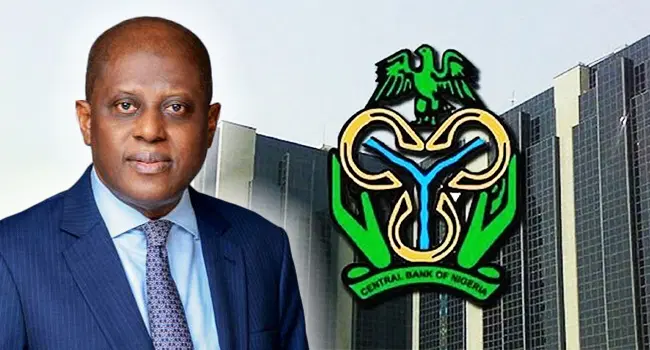
Speaking at the conference, the CBN Governor, Mr. Olayemi Cardoso, made a case for balance rather than substitution. Represented by his special adviser on operational risk management, Fatai Karim, Mr. Cardoso argued that Nigeria’s payments evolution must recognise both the power of digital finance and the enduring necessity of cash. “Cash remains king. It is critical that this is maintained,” he said.
A Payments Ecosystem in Transition
Over the past decade, Nigeria’s payment ecosystem has expanded at remarkable speed. Policy reforms, technological innovation, and changing consumer behaviour have driven a surge in electronic transactions. According to Mr. Cardoso, transaction volumes grew by 276 percent over the past five years, while transaction values jumped by 581 percent, reflecting the scale of digital adoption across banking, commerce, and public services.
But those gains have not erased the structural realities of the Nigerian economy. Informal markets dominate daily commerce, rural communities remain unevenly connected to digital infrastructure, and small businesses often operate at margins where cash remains the simplest and most trusted medium of exchange.
“Despite this momentum, cash remains a critical component of everyday transactions, particularly in informal markets, rural communities, and among small businesses,” the CBN governor said.
The data tells the same story. While electronic transactions have multiplied, total currency in circulation still rose in 2025, underscoring sustained demand for physical cash alongside digital alternatives.
ATMs and PoS as the New Cash Infrastructure
Rather than viewing cash and digital payments as competing forces, the CBN is increasingly framing them as complementary systems. In this model, ATMs and PoS terminals are not relics of a pre-digital era, but critical infrastructure for stabilising cash distribution.
“Electronic and digital channels decentralise and stabilise cash distribution, reduce operational bottlenecks, and enhance client experience,” Cardoso said.
In practical terms, this means that Nigerians are no longer reliant solely on bank branches for access to cash. ATMs extend reach into semi-urban areas, while PoS terminals embedded in neighbourhood shops and markets have become informal cash points, especially where bank infrastructure is thin.
This decentralisation has helped smooth distribution, reduced pressure on branches, and improved resilience in cash supply, particularly during periods of high demand.
Policy Fine-Tuning Underway
As usage patterns evolve, the CBN is also reviewing the rules that govern the infrastructure supporting cash access. Cardoso disclosed that the apex bank is assessing the ratio of bank-issued cards to the number of ATMs in circulation, a technical issue with practical implications for congestion, service quality, and consumer experience.
“This year, certainly within the next few months, we hope to have clarity once engagements with stakeholders are concluded,” he said.
The review reflects a broader understanding that cash availability is not just about printing currency. It depends on logistics, incentives, infrastructure investment, and coordination among financial institutions. Weakness in any of these links can disrupt access, regardless of how much currency is issued.
Money’s Long Arc
Tracing the evolution of money from commodities to coins, paper, cards, and now digital currencies, Cardoso suggested that the future of money will not be binary. It will be layered. “The future of money will be both physical and digital,” he said.
That view resonated with industry stakeholders at the conference. The President of Chartered Institute of Bankers of Nigeria (CIBN), Mr. Pius Olanrewaju, argued that cash and digital payments must coexist as complementary pillars of Nigeria’s financial system.
Although electronic transactions exceeded 60 billion in 2025, Olanrewaju noted that cash remains indispensable for low-value transactions, particularly in informal and rural sectors where digital penetration is still uneven.
Numbers That Tell a Story
From the operational side, the continued relevance of cash is even clearer. The chairman of the Committee of Heads of Bank Operations, Abraham Aziegbe, said ATM withdrawals reached N36.34 trillion in the first half of 2025 alone, a figure that highlights how deeply cash remains embedded in everyday economic life.
Represented by his first vice chairman, Tolulope Ogundipe, Aziegbe called for stronger integration between cash and digital channels, stressing that collaboration, innovation, and effective oversight are essential to strengthening Nigeria’s financial ecosystem.