The federal government’s reforms under President Bola Ahmed Tinubu have stabilised the economy and restored a measure of macroeconomic order, but the harder phase now lies ahead, converting stability into scale, dialogue into deals, and presence into production. If Nigeria succeeds, the image of its first sovereign pavilion, Nigeria House in Davos, led by Vice President Kashim Shettima, will be remembered as the moment the country stopped merely showing up and began shaping its economic destiny, but if it fails, it will fade into a familiar list of missed opportunities. Nigeria’s task now is to prove that the reforms shaping its story are durable enough to attract not just attention, but capital, jobs, and long-term growth. Enam Obiosio writes.
In Davos, reputation is currency. Each January, as political leaders, investors, and corporate strategists converge on the Swiss Alps, nations are quietly assessed, not by speeches alone, but by credibility, consistency, and clarity of direction. At the 2026 World Economic Forum, Nigeria arrived with a deliberate signal that its reform story has entered a new phase.
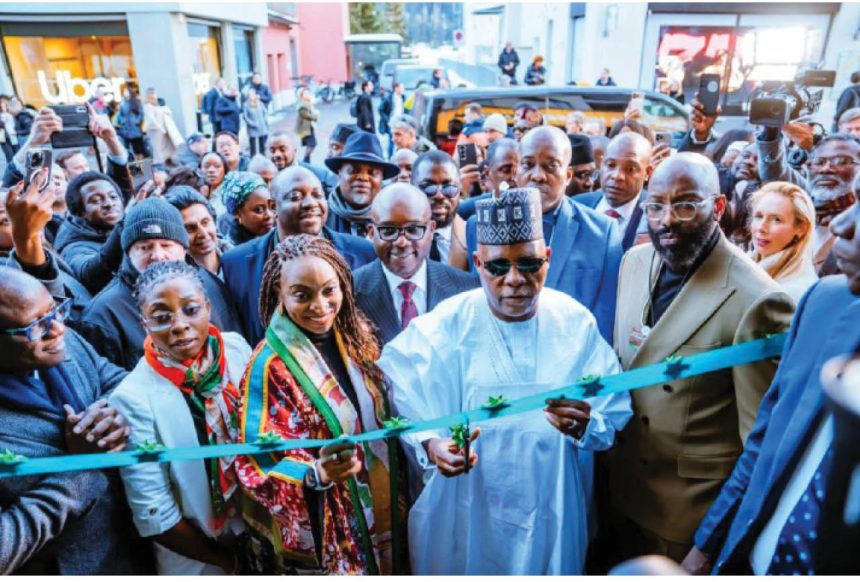
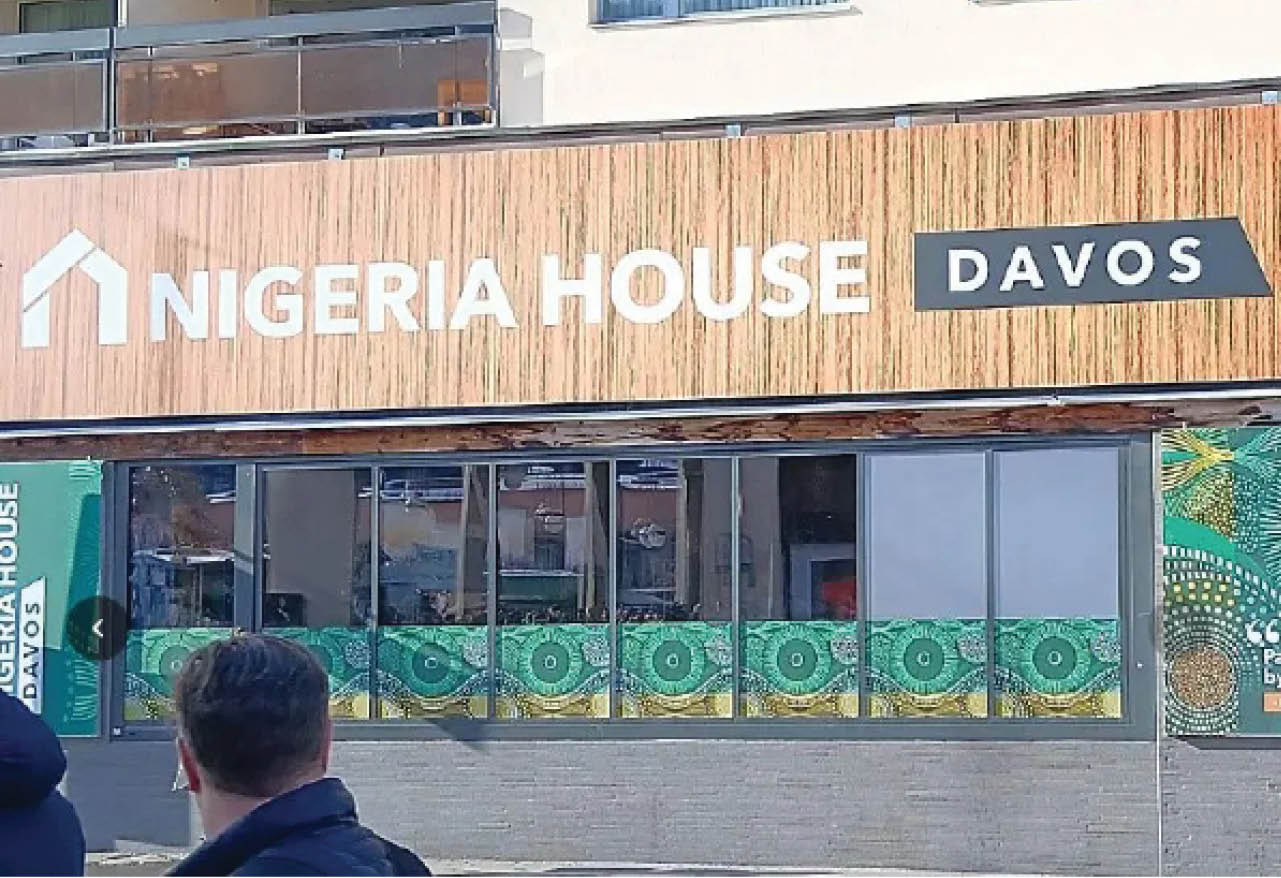
For the first time in its history, Africa’s largest economy unveiled a sovereign pavilion at Davos, branded Nigeria House. It was more than architectural presence. It was a statement of intent, a physical expression of reforms unfolding at home, and an attempt to reposition Nigeria from a country often discussed in global forums to one speaking for itself, with structure and purpose.
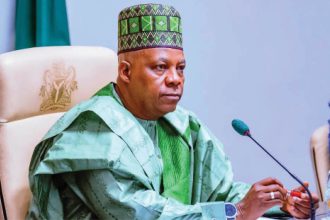
Vice President Kashim Shettima, who formally inaugurated Nigeria House, framed the moment as a break from the past. Nigeria, he said, could no longer afford episodic engagement with the global economy. Growth, investment, and competitiveness now depend on deliberate and structured interaction with global capital and ideas. The pavilion, in his words, reflects seriousness, readiness, and resolve.
That resolve rests on reforms that have tested political courage and public patience, but which are increasingly reshaping Nigeria’s macroeconomic fundamentals.
The Reform Backdrop
Since 2023, the administration of President Bola Ahmed Tinubu has pursued a reform agenda anchored on correcting long-standing distortions. Fuel subsidy removal, foreign exchange market liberalisation, fiscal consolidation, and tax reforms were not cosmetic measures. They were foundational shifts aimed at restoring credibility to public finance and freeing up resources for productive investment.
By 2025, early dividends were visible. Economic growth accelerated to about 3.9 percent, the fastest pace in over a decade, driven largely by the non-oil economy. Services, agriculture, finance, and technology deepened their contribution, while non-oil revenues rose to nearly three-quarters of government collections. Inflation, which had crossed 30 percent in late 2024, eased significantly by the end of 2025, and external buffers strengthened, with foreign reserves rising above 45 billion dollars and improved stability in the foreign exchange market.
These gains did not eliminate Nigeria’s structural challenges, but they shifted the conversation. At Davos, Nigeria was no longer defending the logic of reform. It was making the case for what reform enables.
Nigeria House as Reputational Infrastructure
In global finance, perception often precedes capital. Investors price uncertainty quickly, and countries that fail to manage their narrative pay a premium in borrowing costs and delayed investment. Nigeria House was conceived as reputational infrastructure, a platform to articulate priorities clearly and engage investors directly.
Although designed as a whole-of-government platform, spanning trade, investment, energy, infrastructure, technology, climate, and culture, the Vice President was explicit that its success depends on the private sector. Government can de-risk and create frameworks, he argued, but only enterprise converts policy into productivity. The pavilion’s value will be measured not by footfall, but by the quality of conversations it hosts and the transactions it catalyses.
The Honourable Minister of Industry, Trade and Investment, Dr. Jumoke Oduwole, reinforced this point, describing Nigeria House as a product of effective public-private collaboration and a symbol of renewed national confidence. According to her, the administration’s reforms are rebuilding trust and restoring credibility, positioning Nigeria as a destination for strategic partnerships rather than speculative interest.
From Debt to Investment
One of the clearest messages from Nigeria’s delegation in Davos was a recalibration of economic strategy. Speaking at a high-level panel and in interviews on the sidelines, the Honourable Minister of Finance and Coordinating Minister of the Economy, Mr. Wale Edun, outlined the Federal Government’s determination to rely less on debt and focus more on investment-led growth.
Nigeria’s debt-to-GDP ratio, rebased to about 39.4 percent in early 2025, is projected by the IMF to decline to around 35 percent in 2026. The pathway to that outcome, Edun explained, lies not in austerity alone, but in revenue growth, domestic resource mobilisation, and private sector participation. A comprehensive tax reform programme, automation of revenue collection, and efforts to block leakages are central to raising Nigeria’s tax-to-GDP ratio from about 13 percent toward 18 percent over time.
This shift matters because Nigeria’s private sector already accounts for roughly 90 percent of GDP. Unlocking investment, domestic and foreign, is therefore not a theoretical exercise. It is the primary lever for job creation, productivity, and inclusive growth.
Global Context, Nigerian Opportunity
The timing of Nigeria House matters. Davos 2026 unfolded against a backdrop of heightened geopolitical tension, fragmented trade relations, and cautious capital flows. Supply chains are being reconfigured as firms seek resilience and diversification, driven by geopolitical rivalry and trade restrictions.
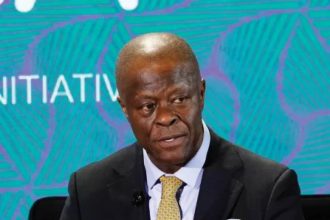
At Nigeria House, Director-General (DG) of the World Trade Organization (WTO), Dr Ngozi Okonjo-Iweala, urged Nigeria to position itself deliberately to capture these shifts. Rising adoption of China+1 strategies and broader supply chain diversification present an opportunity for countries that can offer scale, stability, and market access.
Nigeria, she argued, must move from stabilisation to job creation. Renewable energy, textiles, pharmaceuticals, and digital trade infrastructure are sectors where global firms are seeking alternative production hubs. With the right incentives, infrastructure, and regulatory clarity, Nigeria could attract a meaningful share of these relocating value chains.
Her message was direct. Reforms are necessary, but not sufficient. They must translate into factories, jobs, and exports.
From Presence to Positioning
Nigeria’s history at global forums has often been characterised by strong presence but limited follow-through. Davos offers access, not automatic capital. Investors want bankable projects, predictable policy, and institutional discipline.
The challenge, therefore, is execution. For Nigeria House to matter beyond symbolism, several conditions must be met. First, project readiness. Investors expect credible feasibility studies, regulatory pathways, and dispute-resolution mechanisms. Second, policy predictability. Exchange rate transparency, contract sanctity, and regulatory consistency shape long-term investment decisions more than promotional rhetoric. Third, institutional follow-up. Engagements initiated in Davos must be tracked through to financial close, with clear accountability.
Permanent Secretary in the Ministry of Solid Minerals Development, Engr Faruk Yusuf Yano, highlighted reforms in the solid minerals sector aimed at diversification and value addition, noting that Nigeria House provides a platform to consolidate these gains through targeted investor engagement. Similar sector-specific propositions were advanced across energy, technology, agriculture, and creative industries.
What Success Would Look Like
Success will not be measured by headlines alone. It will show up in term sheets signed months after Davos, in export-oriented partnerships that reduce import dependence, and in blended finance structures that crowd in private capital alongside development finance.
Nigeria’s reforms have altered the baseline. The economy is more open, more transparent, and more investible than it was two years ago. But credibility is cumulative. Each policy reversal, each regulatory surprise, erodes hard-won trust. Conversely, consistent execution compounds confidence. Nigeria House is a tool. Its value depends on how it is used.