By Anita Dennis
In order to boost Nigeria’s clean energy drives, the federal government has signed a €20 million agreement with the German government to accelerate renewable energy development and support the country’s energy transition goals.
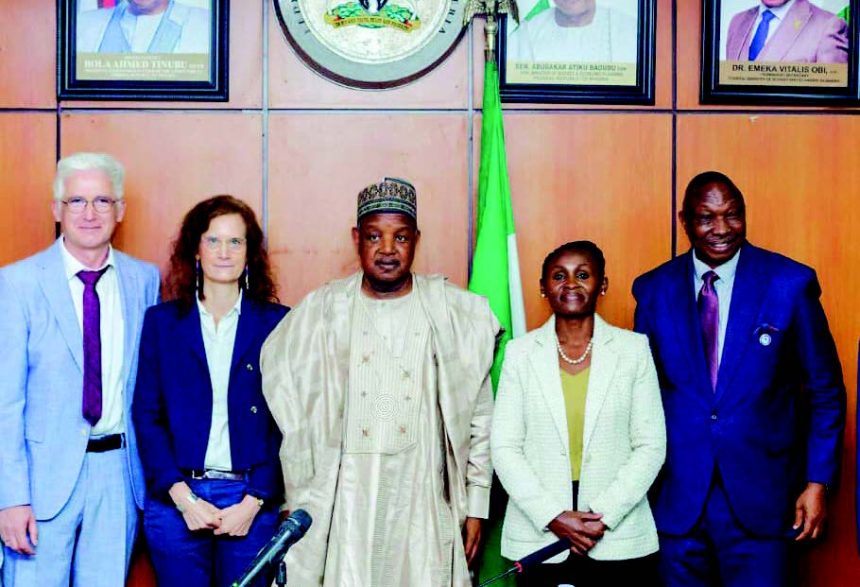
The partnership, finalised recently in Abuja, would be facilitated through the KfW Development Bank and the Africa Enterprise Challenge Fund (AECF). It aims to strengthen Nigeria’s shift toward sustainable energy sources while empowering young people and underserved communities.
The agreement is “a strategic intervention for inclusive energy growth and capacity building,” said Mr. Abubakar Bagudu, Honourable Minister of Budget and Economic Planning, who represented Nigeria at the recent signing ceremony at the Ministry’s headquarters.
He said that the initiative would focus on three core areas: increasing access to renewable energy to improve efficiency, expanding vocational training in renewable energy technologies, and reducing the country’s dependence on fossil fuels.
“This partnership does not only bring clean energy closer to Nigerians who need it most- it also provides pathways for youth and women to participate meaningfully in the new energy economy,” he noted. “We are talking about skills, jobs, and sustainable development all woven into one initiative.”
The agreement comes at a time when Nigeria is actively seeking ways to strengthen energy access, especially in remote and rural communities that remain off-grid. According to the Honourable Minister, the project aligns with national goals to expand energy infrastructure, improve climate resilience, and accelerate green economic transformation.
Mr. Bagudu called for better coordination among development programmes to ensure efficient use of resources and avoid duplication. “We need all hands-on deck—government, private sector, and development partners—to unlock Nigeria’s full energy potential sustainably.”
Speaking at the ceremony, Dr. Karin Jansen, First Secretary and Head of Development Cooperation at the German Embassy in Nigeria, said that the funding highlights Germany’s long-standing commitment to Nigeria’s development priorities.
“We are proud that this collaboration coincides with the 50th anniversary of our Energy Transition Challenge Fund. Our focus will be on financing impactful, scalable, and sustainable projects that align with Nigeria’s ambition for a greener future,” she said.
Mr. Gerald Keuhnemund, the representative of the KfW Development Bank, emphasised the importance of strategic funding and private sector engagement in ensuring that renewable energy solutions are both affordable and impactful.
The project is expected to support job creation by building a skilled workforce capable of deploying and maintaining renewable energy infrastructure, while also offering support to enterprises working in sectors like health, education, and agriculture.
As the world races toward a net-zero future, the Nigeria-Germany agreement signals a step forward in bridging the country’s energy gap, not just through technology but through inclusion, innovation, and long-term capacity development.