REFORM TALKS with Enam Obiosio
When Nigeria launched the National Broadband Plan (2020–2025), it set an ambitious goal of achieving 70 percent broadband penetration by December 2025. The target reflected a recognition that broadband is no longer a luxury. It is the backbone of a modern economy, powering education, healthcare, financial inclusion, innovation, e-commerce and government services.
Today, seven months after that deadline, the reality tells a different story. According to the latest data from the Nigerian Communications Commission (NCC), broadband penetration stood at 55.67 percent in April 2026, with approximately 120.7 million active broadband subscriptions. While this represents steady progress, it also confirms that Nigeria remains significantly below its own target.
I believe this moment calls for honesty rather than celebration. Yes, there has been consistent growth. Broadband penetration has increased for 12 consecutive months, rising from 48.01 percent in July 2025 to 55.67 percent by April 2026. Subscriber numbers have also continued to climb. These are encouraging indicators that demand for internet services remains strong and that investments by telecom operators are yielding results.
However, in my opinion, we should not confuse progress with success. The National Broadband Plan was not designed merely to record annual improvements. It was created to achieve a measurable national objective within a defined timeframe. Missing that target should prompt serious reflection about what worked, what failed and what must change.
I believe the biggest lesson is that Nigeria does not suffer from a lack of good policies. Our challenge has always been implementation. For years, the federal government has acknowledged broadband as a catalyst for economic growth. Yet many of the barriers that operators complained about at the beginning of the broadband plan still exist today. Fibre optic deployment remains slow in many parts of the country. Multiple taxation continues to increase operational costs. Right of Way (RoW) approvals remain inconsistent across states, while bureaucracy delays infrastructure projects that should have been completed much earlier.
These are not new problems. They are old challenges that have simply outlived several policy documents. I would argue that government must now shift its attention from announcing ambitious targets to removing the obstacles that prevent those targets from becoming reality.
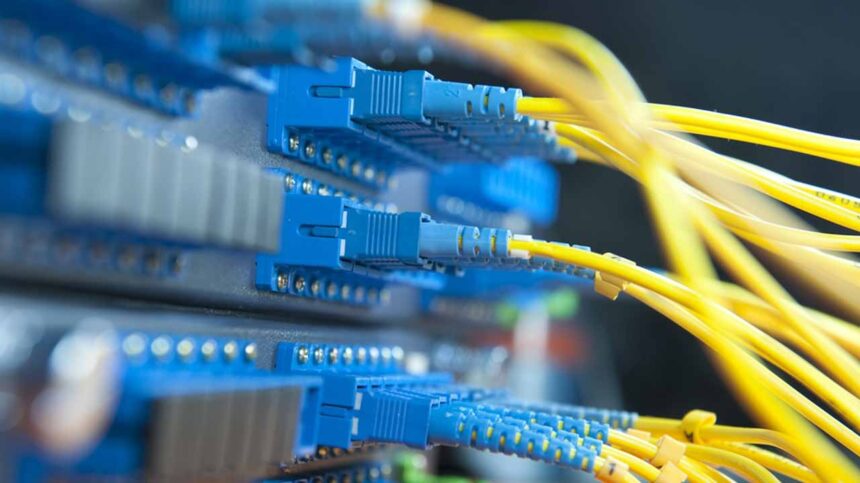
One area that deserves immediate attention is fibre infrastructure. Every successful digital economy has invested heavily in nationwide fibre networks because they form the foundation upon which broadband services are built. Without sufficient fibre coverage, network quality suffers, internet speeds decline and digital inclusion becomes difficult to achieve.
I urge the federal government to accelerate fibre rollout across the country through stronger collaboration with state governments and the private sector. Infrastructure deployment should not be delayed by unnecessary approvals or inconsistent regulatory practices.
Equally important is the issue of RoW charges. Some states have made commendable progress by reducing or waiving these charges, recognising that digital infrastructure benefits the entire economy. Others continue to impose costs and administrative hurdles that discourage investment.
In my opinion, Nigeria can no longer afford such policy inconsistencies. Broadband expansion should not depend on the state in which an operator chooses to invest. I believe the federal government should work with governors to establish a harmonised national framework that simplifies approvals and reduces the cost of deploying telecommunications infrastructure across all states.
Another issue that deserves greater attention is rural connectivity. Private investors naturally prioritise commercially viable urban markets where they can recover investments quickly. Unfortunately, this leaves millions of Nigerians in rural communities with limited or unreliable internet access. As long as broadband remains concentrated in cities, Nigeria cannot claim to have achieved meaningful digital inclusion.
I believe government has a responsibility to bridge this gap.The Universal Service Provision Fund should be deployed more aggressively to support broadband infrastructure in underserved communities. Incentives should also be introduced to encourage operators to extend services beyond profitable urban centres. Technologies such as satellite broadband and fixed wireless access should complement fibre deployment in locations where laying fibre may not be economically feasible.
Affordability is another issue that cannot be ignored. Broadband penetration depends not only on network availability but also on whether ordinary Nigerians can afford to use the service. Rising inflation, exchange rate pressures and increasing operational costs have all affected the price of internet services and digital devices.
From where I stand, expanding broadband access must go hand in hand with making broadband affordable. Government should review taxes, import duties and regulatory costs that increase the price of telecommunications equipment. Supporting local production of digital infrastructure and devices could also reduce dependence on imports while creating jobs within the economy.
Security of telecommunications infrastructure is equally critical. Fibre cuts, vandalism and equipment theft continue to disrupt services across the country. Every damaged fibre cable affects businesses, hospitals, schools and financial institutions that depend on reliable internet connectivity.
I believe the designation of telecommunications infrastructure as Critical National Information Infrastructure should not exist only on paper. It must be fully enforced. Security agencies should work closely with operators to protect these assets, while those responsible for vandalism should face swift prosecution.
Beyond infrastructure, I believe Nigeria must also redefine how it measures broadband success.
Penetration figures are important, but they do not tell the complete story. The National Broadband Plan also envisioned minimum download speeds of 25 Mbps in urban areas and 10 Mbps in rural communities. If millions of subscribers continue to experience slow or unreliable internet despite being counted in penetration statistics, then we are only measuring access, not quality.
In my opinion, Nigerians deserve more transparency on service quality. The NCC should publish regular performance reports showing internet speeds, network reliability and service quality across operators and regions. This would not only improve accountability but also encourage healthy competition among service providers.
I also believe broadband policy should be treated as an economic development strategy rather than simply a telecommunications agenda. Reliable internet enables digital learning, telemedicine, financial inclusion, remote work, innovation, e-commerce, smart agriculture and efficient public service delivery. Every percentage increase in broadband access creates opportunities for entrepreneurs, students and businesses to participate more fully in the digital economy.
This is why broadband should occupy a central place in Nigeria’s economic transformation agenda.
Finally, I believe it is time for government to present a successor to the National Broadband Plan. The previous plan has expired, and the country cannot continue without a clear roadmap for the years ahead.
The next strategy should be more than another policy document filled with ambitious aspirations. It should contain realistic milestones, annual performance reviews, clearly defined funding mechanisms and stronger accountability for implementation. Nigerians deserve to know not only what government intends to achieve but also how those objectives will be delivered and measured.
I do not see the missed 70 percent target as evidence of failure alone. Rather, I see it as an opportunity to reassess our approach. The steady growth in broadband subscriptions demonstrates that the demand exists. Investors remain interested, consumers continue to embrace digital services and the foundation for progress is already in place.
What is missing is a stronger sense of urgency. I believe Nigeria has the potential to become one of Africa’s leading digital economies, but that ambition will not be realised through declarations or policy launches alone. It will require disciplined implementation, coordinated action across all levels of government and sustained investment in digital infrastructure.
The next phase of Nigeria’s broadband journey should not be defined by missed deadlines. It should be remembered for decisive action, measurable progress and the political will to turn policy promises into digital opportunities for every Nigerian.