By Caroline Ameh
Every month, Musa Ibrahim watches almost half of his salary disappear into rent.
The 38-year-old Abuja civil servant has long accepted what millions of Nigerians reluctantly believe, that owning a home is simply beyond the reach of an average salary earner.
Commercial mortgage rates have traditionally remained too expensive, while outright purchase requires savings few households can accumulate.
“I have always believed that if I could pay rent every year, I should be able to pay for my own house gradually,” Musa says.
“But the mortgage system has never really worked for people like us.”
His experience mirrors that of millions across the country.
Nigeria’s housing deficit is estimated at between 20 million and 28 million units. As cities continue to expand and construction costs rise, decent housing has steadily become less affordable, pushing many families into perpetual tenancy and informal settlements.
For decades, governments largely approached the problem from one direction, building houses.
Yet housing experts increasingly argue that Nigeria’s biggest challenge has never been construction alone. It has been finance.
Without affordable long-term mortgage funding for buyers and reliable capital for developers, even well-designed housing programmes struggle to achieve lasting impact.
That thinking lies behind one of Nigeria’s most ambitious housing finance initiatives, the Ministry of Finance Incorporated Real Estate Investment Fund, better known as MREIF.
Sponsored by the Ministry of Finance Incorporated (MOFI) and professionally managed by ARM Investment Managers, the fund is attempting to reshape Nigeria’s mortgage market by connecting government policy with private-sector investment. Instead of relying principally on government-built estates, MREIF seeks to solve what many industry participants regard as the weakest link in Nigeria’s housing value chain, access to affordable finance.
According to Olubiyi Adekunbi of ARM Investment Managers, the idea is straightforward.
“The objective is to address the housing deficit through the mobilisation of public and private capital,” he explains.
“That capital is channelled into providing single-digit mortgages through participating financial institutions, while also supporting developers through off-take guarantees.”
The numbers help explain why the initiative has attracted attention.
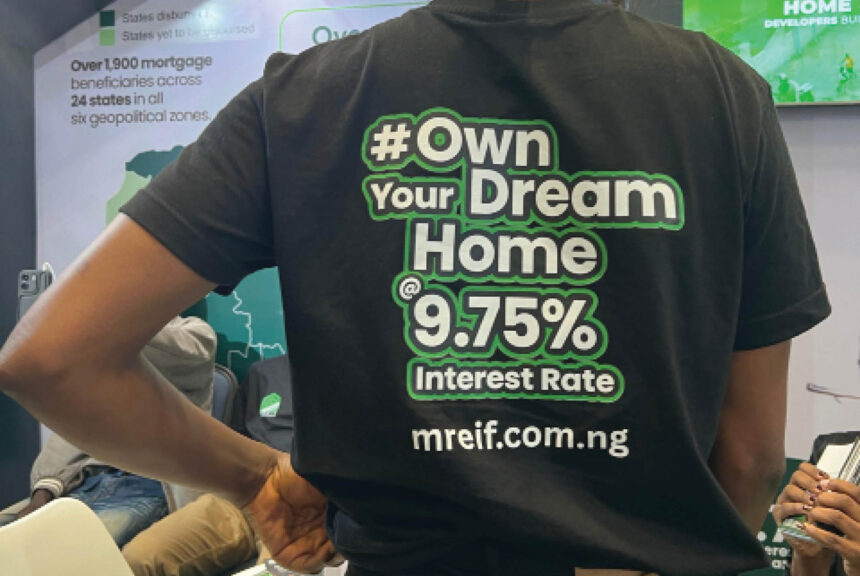
Eligible Nigerians can obtain mortgages of up to N100 million at a fixed annual interest rate of 9.75 percent, repayable over as long as 20 years depending on years remaining in service. Borrowers provide at least 10 percent equity, while repayments are structured to remain within one-third of monthly income. Unlike many previous mortgage schemes, the programme extends beyond salaried workers to include entrepreneurs and Nigerians in the diaspora who can demonstrate stable earnings.
“The most important thing is that you can demonstrate a consistent source of income,” Adekunbi says.
“Whether you’re employed, self-employed or living in the diaspora, the opportunity exists to own property in Nigeria.”
The innovation, however, is not designed only for aspiring homeowners.
It also targets another longstanding weakness within Nigeria’s housing market, financing for developers.
Many developers have traditionally depended on off-plan subscriptions, family financing and expensive commercial loans because banks considered residential projects too risky. That often resulted in stalled projects, abandoned developments and escalating construction costs.
MREIF attempts to reduce that uncertainty through its off-take guarantee programme.
Where developers obtain construction finance but struggle to sell completed units quickly enough, the fund may purchase up to 60 percent of the agreed housing stock, helping developers repay lenders while giving banks greater confidence to finance future projects.
“In the absence of funding, many developers depend on off-plan subscriptions or contributions from family and friends, which are usually insufficient to complete projects,” Adekunbi explains.
“With the off-take guarantee, that pressure is reduced. Developers are able to complete projects and lenders have greater confidence.”
Early indicators suggest the model is beginning to gain traction.
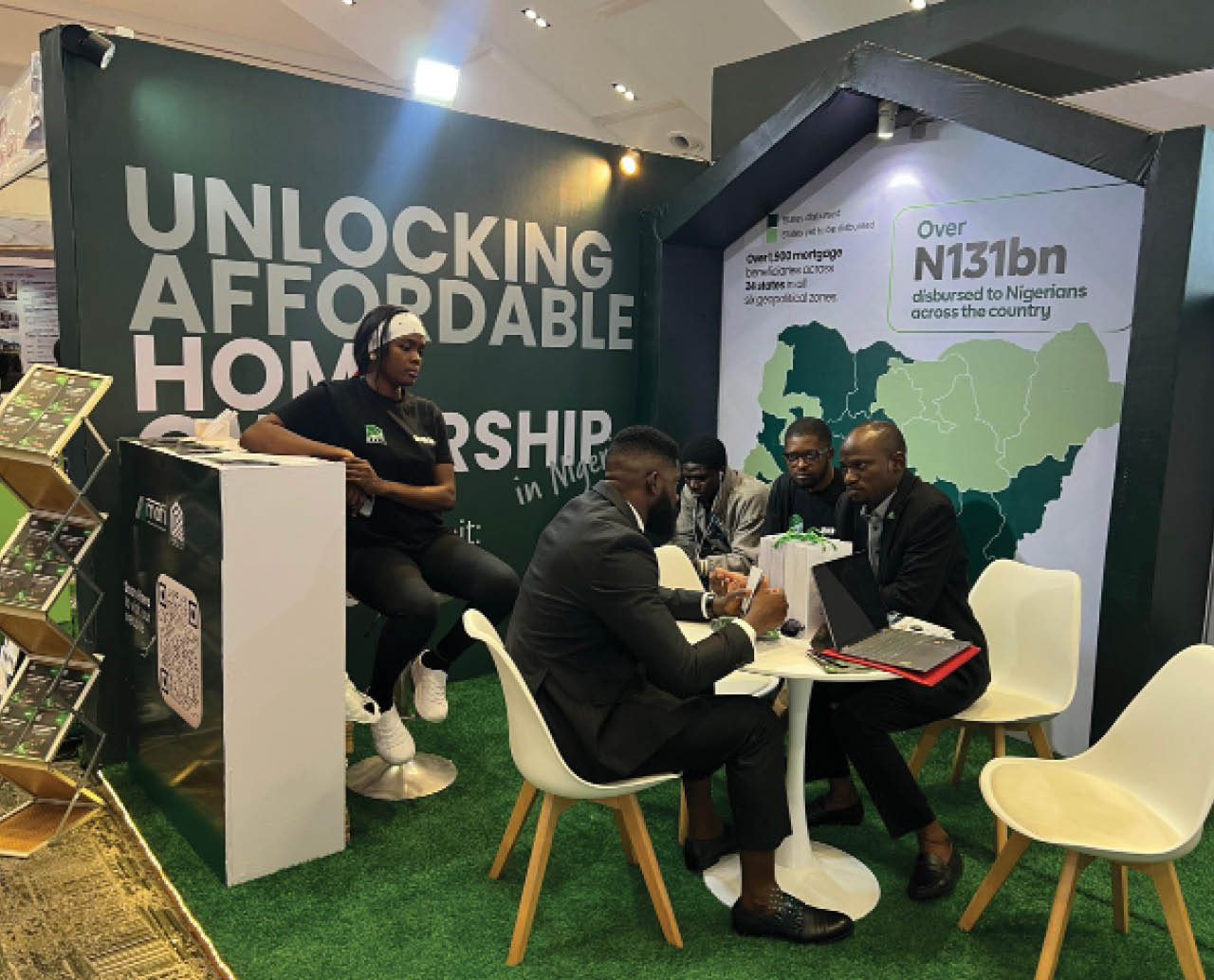
Within slightly more than one year, MREIF, established by MOFI, managed by ARM, had facilitated 1,900+ mortgages across 26 states across the six geopolitical zones, disbursed approximately N131 billion+, unlocked N221 billion in property value and supported the delivery of 939 housing units through its off-take guarantee projects.
President Bola Ahmed Tinubu has described the initiative as an important milestone in building a functional mortgage market, arguing that one of Nigeria’s greatest barriers to homeownership has always been the absence of affordable long-term housing finance. The programme forms a central component of the administration’s Renewed Hope Housing Agenda, which seeks to combine government policy with private-sector expertise to expand homeownership.
Even so, economists caution that mortgage finance alone cannot solve Nigeria’s housing challenge.
The Chief Executive Officer of Financial Derivatives Company, Mr. Bismarck Rewane, has consistently argued that housing affordability is inseparable from the broader macroeconomic environment.
“Mortgage affordability is ultimately a function of income, inflation and macroeconomic stability,” he has maintained.
His assessment reflects a broader concern across the housing industry. While lower mortgage rates improve access to finance, many Nigerians still face declining purchasing power as inflation continues to increase construction costs and reduce disposable income.
The Managing Director and Chief Executive Officer of the Federal Mortgage Bank of Nigeria, Shehu Usman Osidi, reaches a similar conclusion from another perspective.
According to him, government funding alone cannot close Nigeria’s housing gap. Sustainable progress requires deeper public-private partnerships, stronger mortgage institutions and greater participation by long-term investors such as pension funds and insurance companies. His views closely align with the philosophy underpinning MREIF, which operates as a Securities and Exchange Commission regulated investment fund under the professional management of ARM Investment Managers.
Developers, meanwhile, continue to identify obstacles beyond finance.
The Real Estate Developers Association of Nigeria has repeatedly highlighted cumbersome land administration, multiple taxation and inadequate infrastructure as some of the biggest constraints to affordable housing. Delays in processing Certificates of Occupancy and other land documentation continue to discourage investment and slow project delivery.
Those structural weaknesses partly explain why mortgage lending still accounts for less than one percent of Nigeria’s Gross Domestic Product, among the lowest mortgage penetration rates globally.
Even so, MREIF has shifted Nigeria’s housing debate.
Rather than measuring success solely by the number of houses government builds, the initiative places financing at the centre of the conversation. It recognises that sustainable homeownership depends on functioning capital markets, professional fund management, private investment, efficient mortgage institutions and predictable public policy.
Whether that model ultimately transforms Nigeria’s housing landscape will depend on consistent implementation, macroeconomic stability and complementary reforms by federal and state governments. Easier land administration, lower construction costs, stronger institutional investment and continued transparency will determine whether MREIF grows from a promising initiative into a nationwide housing finance platform.
For Musa Ibrahim and millions like him, however, the question remains deeply personal.
The dream is not simply to own a house. It is to finally replace years of paying rent with the security of owning a home.
If ARM Investment Managers and the Ministry of Finance Incorporated Real Estate Investment Fund can continue expanding access to affordable mortgage finance while attracting the long-term investment Nigeria’s housing sector has long lacked, that dream may gradually become attainable for far more Nigerians than ever before.