
By Jennete Ugo Anya
State governments in Nigeria recorded a 93 percent increase in real revenue between 2023 and 2025, creating greater fiscal capacity for infrastructure and public services following the federal government’s economic reforms, the World Bank has said.
The finding is contained in the bank’s latest Nigeria Development Update, titled Beyond the Federal Purse: How Higher Revenues Reshaped State Priorities. It attributes the increase to higher statutory allocations, refunds, the settlement of outstanding federal debts, special intervention funds and stronger Value Added Tax (VAT) collections.
Gross federation revenue rose by 69 percent in real terms over the period, supported largely by exchange-rate reforms, petrol subsidy removal and improved revenue collection.
The increase in revenue also translated into higher state spending, which rose by about 92 percent in real terms. Capital expenditure accounted for 61 percent of state budgets in 2025, compared with 46 percent before the reforms. Transport recorded the largest increase among infrastructure areas, while housing and agriculture also received additional funding.
However, the spending pattern raises questions about the balance between infrastructure investment and social services. Although education spending increased in nominal terms, its share of total state expenditure fell from 14.9 percent in 2021 to 12.1 percent in 2025. Health expenditure remained at about seven per cent, while social protection’s share rose from 1.4 percent to 4.4 percent.
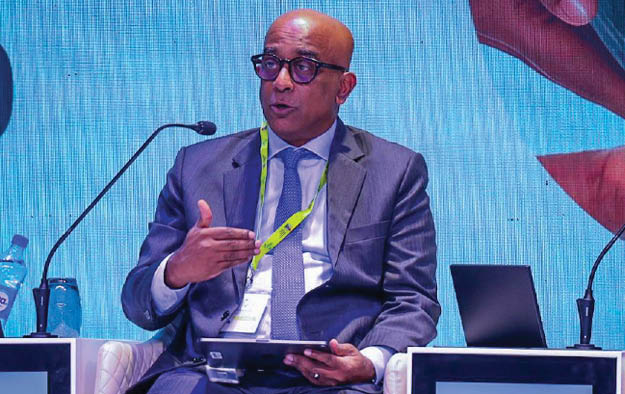
The World Bank’s Country Director for Nigeria, Mathew Verghis, described the additional revenue as an opportunity to improve public services and support employment.
“The bold macroeconomic reforms have substantially increased fiscal revenues at the state level, providing a unique opportunity to improve infrastructure, education, healthcare, and water services, which are critical to creating more and better jobs,” he said.
He stated that stronger spending efficiency, accountability and service delivery would determine whether the additional resources improve Nigerians’ lives.
The bank also noted that more states were increasing internally generated revenue, potentially reducing their dependence on federal allocations.
Nigeria’s broader economic indicators have improved. The economy grew by 4.2 percent in the first half of 2026, compared with 3.9 percent a year earlier and 3.5 percent in 2024. Services led the expansion, while agriculture also contributed to growth. The bank further reported that the poverty rate had stabilised for the first time since 2019.
In its Africa Economic Update, the World Bank projected Nigeria’s economy would grow by 4.3 percent in 2026, up from 4.0 percent in 2025, and by 4.4 percent in both 2027 and 2028. Inflation is projected to decline from 23 per cent in 2025 to 15.7 percent in 2026 and 12.2 percent by 2028, although higher fuel prices and seasonal food costs remain challenges.
External conditions have also supported the economy. Nigeria’s current account surplus reached $12 billion, equivalent to 7.1 per cent of gross domestic product, in the first half of 2026, while external reserves rose above $54 billion in September.
Despite these gains, the bank warned that higher fuel costs continue to weigh disproportionately on low-income households. It also highlighted risks from volatile oil prices, disruptions to crude production, sudden capital outflows and increased public spending ahead of the 2027 elections.