By Ahmed Ahmed
As the administration of President Bola Ahmed Tinubu intensifies implementation of its Renewed Hope Agenda focused on economic diversification, industrial expansion and foreign exchange stability, the Nigerian Export-Import Bank (NEXIM) is increasingly positioning itself at the centre of Nigeria’s non-oil export transformation drive through expanded financing interventions, regional trade integration, agro-industrial partnerships and institutional reforms.
Nigeria’s export financing landscape is witnessing broader institutional expansion as NEXIM deepens reforms across non-oil exports, agro-industrial financing, intra-African trade and small business support, reflecting the federal government’s growing emphasis on economic diversification and foreign exchange expansion under the administration of President Bola Ahmed Tinubu. The bank’s widening engagements across strategic sectors underscore a broader policy shift toward export-led growth, value addition and regional trade integration aimed at reducing dependence on oil revenues while strengthening Nigeria’s long-term external earnings capacity.
Recent engagements involving the Central Bank of Nigeria (CBN), development finance institutions (DFIs), agro-industrial stakeholders and regional trade actors increasingly point to NEXIM’s emergence as one of the administration’s strategic institutions driving Nigeria’s non-oil export expansion framework under the Renewed Hope economic reforms. Across financing, industrial development, regional trade integration and investment facilitation, the bank’s interventions reflect broader policy efforts aimed at repositioning productive sectors of the economy for sustainable growth and foreign exchange generation.
CBN-NEXIM Financing Alignment
One of the bank’s major milestones under this framework involved strategic discussions between NEXIM Managing Director and Chief Executive Officer, Mr. Abubakar Abba Bello, and Governor of the CBN, Mr. Olayemi Cardoso, at the apex bank headquarters in Abuja on April 22, 2026. The engagement focused on expanding export financing, improving funding access for small and medium-sized enterprises and strengthening value-adding sectors capable of generating employment and foreign exchange earnings for the country.
A major outcome of the engagement was renewed emphasis on stronger coordination between DFIs and monetary authorities to support sustainable economic growth and reduce dependence on oil revenues. The discussions further reinforced growing institutional alignment around deepening Nigeria’s non-oil export base through improved financing systems, trade support mechanisms and export competitiveness initiatives.
The engagement also highlighted increasing collaboration between fiscal and monetary institutions toward strengthening productive sectors capable of supporting economic resilience amid foreign exchange pressures and rising demand for export competitiveness.

Sugar Industry Transformation Financing
NEXIM’s expanding role in agro-industrial financing was further demonstrated through its strategic partnership with the National Sugar Development Council (NSDC) to mobilise long-term financing for large-scale sugar industry transformation projects. The collaboration adopted the Engineering, Procurement, Construction plus Financing model to support viable sugar projects, with NEXIM facilitating international export credit access, development finance syndication, guarantees and risk insurance structures.
Executive Secretary and Chief Executive Officer of the NSDC, Mr. Kamar Bakrin, disclosed that Nigeria’s sugar market is valued at about $2 billion, while Africa’s broader sugar market stands at approximately $7 billion. According to Bakrin, sugar by-products in Nigeria alone exceed $10 billion in market value.
Bakrin further revealed that up to $1 billion financing had already been structured under the EPC+F framework through a partnership with SINOMACH at Secured Overnight Financing Rate plus three percent, with a 15-year tenor and three-year moratorium. According to the NSDC, the initiative is projected to generate annual foreign exchange savings of about $300 million, create over 50,000 jobs and achieve up to 25 percent import substitution within five to ten years.
Responding to the initiative, Bello described the sugar industry as “a critical pillar in Nigeria’s drive for economic diversification and non-oil export expansion.” The partnership signals increasing deployment of blended finance structures and long-tenor development financing instruments to strengthen industrial production, reduce import dependence and improve domestic manufacturing capacity.
The intervention also reflects wider attempts under the Renewed Hope Agenda to strengthen agro-industrial production chains capable of supporting food security, industrial growth, employment generation and external sector stability.
AfCFTA And Regional Trade Expansion
Beyond domestic industrial financing, NEXIM has intensified its focus on intra-African trade integration as regional trade opportunities expand under the African Continental Free Trade Area (AfCFTA) framework. Speaking at the 10th anniversary conference of the Ghana Export-Import Bank in Accra, Head of Specialised Business at NEXIM, Mr. Mohammed Awami, outlined measures aimed at improving trade logistics, widening financial access and strengthening digital trade platforms across the continent.
According to Awami, Nigeria’s export financing reforms are increasingly moving toward structured frameworks capable of improving access to finance and supporting export expansion for businesses. A major aspect of the strategy includes mandatory capacity-building programmes for micro, small and medium-sized enterprises before financing support is provided.
Awami also highlighted the Sea Link maritime initiative designed to connect seaports across West and Central Africa in order to reduce logistics bottlenecks and facilitate smoother regional trade flows. The initiative reflects broader efforts to improve trade connectivity and strengthen Nigeria’s competitiveness within regional supply chains.
The bank’s growing involvement in regional trade facilitation underscores increasing recognition that export competitiveness depends not only on financing availability, but also on logistics efficiency, trade infrastructure and stronger regional commercial integration.
Cashew Value Addition Strategy
NEXIM further reinforced its agro-processing and value-addition strategy during the fourth edition of Nigeria Cashew Day held in Abuja on January 22, 2026. The event, organised by the National Cashew Association of Nigeria (NCAN) in collaboration with the African Cashew Alliance, focused on unlocking investment, innovation and global trade opportunities within Nigeria’s cashew industry.
Representing Bello at the event, Dr. Babagana stated that the bank remained committed to supporting agribusiness export growth, value addition and expanded market access for Nigerian products. According to him, “We remain committed to enabling value addition, facilitating global market access, and strengthening Nigeria’s non-oil export sector.”
President of the NCAN, Dr. Ojo Joseph Ajanaku, disclosed that Nigeria currently exports close to 600,000 metric tonnes of cashew annually, generating over $400 million in foreign exchange earnings. However, Ajanaku noted that limited local processing and inadequate access to low-cost financing continue constraining the industry’s full economic potential.
The bank’s interventions within the cashew value chain reflect broader policy efforts under the Renewed Hope Agenda to shift Nigeria’s export structure from raw commodity exports toward higher-value processed products capable of generating stronger foreign exchange earnings, industrial growth and improved domestic value retention.
The emphasis on agro-processing also aligns with broader national efforts to improve local manufacturing capacity, deepen rural industrialisation and strengthen Nigeria’s competitiveness within regional and global agricultural value chains.
Regional Trade Platforms And Export Financing
Under the leadership of Mr. Abubakar Abba Bello, NEXIM has intensified participation in regional trade platforms, particularly the Intra-African Trade Fair, where it has promoted export financing solutions targeted at African market expansion. At the fourth IATF in Algiers, the bank highlighted financing structures aimed at supporting Nigerian businesses to scale production capacity and deepen regional supply chain integration under the AfCFTA.
The bank has maintained sustained engagement with Nigeria’s agricultural export sector, particularly the cashew value chain, through participation in the annual Nigeria Cashew Day organised by the NCAN. NEXIM has consistently reiterated its commitment to financing agribusinesses, supporting local processing and promoting export-oriented industrialisation.
Its trade finance strategy continues to emphasise credit guarantees, direct project financing and advisory support for exporters and agro-processors seeking to move beyond primary commodity exports into higher-value production and processing activities. These interventions increasingly reflect broader attempts to reposition Nigerian businesses for stronger participation within continental trade corridors emerging under the AfCFTA.
Export Credit Insurance Partnership
Another major institutional milestone recorded by NEXIM involved its strategic partnership with the Islamic Corporation for the Insurance of Investment and Export Credit (ICIEC), a Shariah-based multilateral insurer and member of the Islamic Development Bank (IsDB) Group, to strengthen export credit and investment insurance mechanisms in Nigeria.
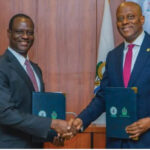
The collaboration was formalised through a Memorandum of Understanding (MoU) signed during the IsDB Group Annual Meetings 2025 held in Algiers, Algeria. The agreement was executed by ICIEC Chief Executive Officer, Dr. Khalid Khalafalla, and NEXIM Managing Director and Chief Executive Officer, Mr. Abubakar Abba Bello, in the presence of senior officials from both institutions.
The partnership established a framework for deeper cooperation in export credit insurance, investment protection, trade facilitation and institutional capacity development. Both institutions stated that the arrangement was designed to support trade and investment flows within ICIEC member states while strengthening Nigeria’s non-oil export ecosystem.
Risk Mitigation And Investment Protection
The ICIEC-NEXIM partnership reflects broader efforts to strengthen institutional support for non-oil exports through structured insurance, trade finance and investment protection frameworks. The collaboration also signals growing alignment between regional development finance institutions and Nigeria’s export diversification objectives. Beyond financing, the partnership introduces a stronger risk-sharing architecture capable of improving investor confidence, supporting export competitiveness and enhancing the bankability of Nigerian export transactions across strategic sectors.
For Nigeria, where non-oil export expansion remains central to economic diversification objectives under the current administration, the agreement represents another institutional attempt to bridge financing and risk management gaps that have historically constrained export growth and cross-border trade participation.
Under the agreement, ICIEC and NEXIM will collaborate on joint product development, technical knowledge exchange and market expansion initiatives tailored to export and investment financing. The arrangement also includes capacity-building programmes aimed at enhancing NEXIM’s operational capabilities in export credit and investment insurance services.
The partnership is expected to improve access to risk mitigation instruments for Nigerian exporters, particularly businesses seeking to scale operations across regional and international markets. NEXIM’s recent membership of the AMAN Union, the association of export credit and investment insurers within OIC member states, is also expected to widen the bank’s regional engagement and institutional reach.
Commenting on the development, Dr. Khalid Khalafalla described the MoU as a significant step toward strengthening trade and investment support systems across member countries. According to him, the collaboration would reinforce mechanisms for increased trade and investment flows while expanding access to insurance-backed protection tools for Nigerian exporters operating in increasingly competitive markets.
Nasarawa Investment Drive
NEXIM also expanded its investment promotion activities through active participation at the Nasarawa State Investment Summit 2026 held in Lafia under the theme, ‘Bold Transitions: Building a Legacy for a Sustainable Future.’ The summit brought together government officials, development finance institutions, private investors and development partners to explore investment opportunities across agriculture, mining, manufacturing and infrastructure.
At the summit, NEXIM showcased financing facilities and strategic interventions targeted at promoting export-oriented investments, agro-processing, solid minerals and manufacturing value chains. The bank also engaged stakeholders on export financing, trade facilitation and capacity-building support for small and medium-sized enterprises.
The Nasarawa engagement further demonstrated NEXIM’s expanding role in supporting subnational economic development and industrialisation beyond Nigeria’s traditional commercial centres. By deepening financing conversations around agriculture, mining and manufacturing, the bank signalled growing commitment toward unlocking productive investments across state economies capable of contributing to export growth and domestic industrial expansion.
Its participation also reflects broader efforts to improve investment mobilisation, strengthen regional production ecosystems and create stronger linkages between local industries and export financing opportunities. Across its recent engagements, NEXIM’s interventions increasingly point toward broader institutional repositioning focused on export competitiveness, industrial financing, regional trade integration and productive sector expansion.
The bank’s growing emphasis on development finance coordination, SME inclusion, agro-industrial financing and trade logistics further signals wider policy efforts under the Renewed Hope Agenda to strengthen Nigeria’s non-oil economy amid continuing attempts to stabilise external earnings and improve economic resilience.
With mounting pressure on foreign exchange liquidity, increasing interest in intra-African trade and renewed focus on domestic industrialisation, NEXIM is gradually emerging as one of the administration’s major financial institutions supporting export-led economic transformation, industrial growth and long-term diversification efforts.