By Anita Dennis
The federal government has rejected claims that Nigeria is on the brink of collapse, arguing instead that recent security operations and improving economic indicators point to a system under pressure but not in retreat.
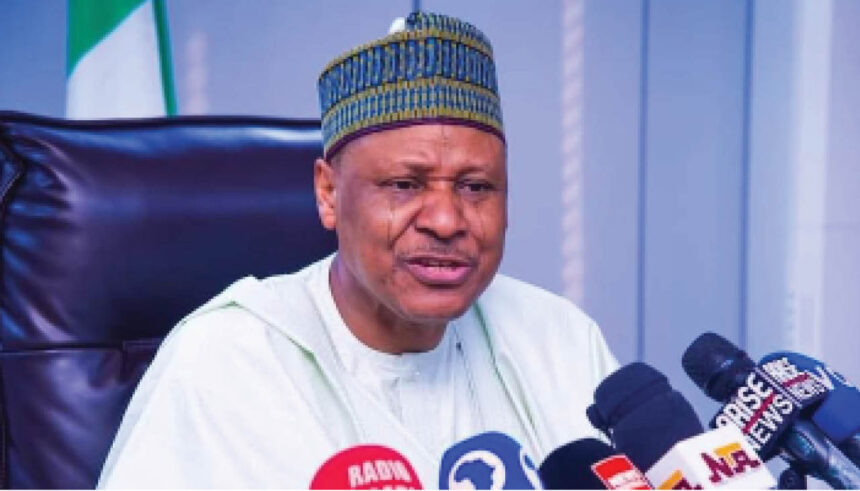
Honourable Minister of Information and National Orientation, Mr. Mohammed Idris, made the case in Abuja at the 81st General Assembly and 23rd Annual General Meeting of the Broadcasting Organisations of Nigeria. His remarks reflect a broader effort by the administration to reframe both domestic and external perceptions at a time when security risks and macroeconomic adjustments continue to test public confidence.
“I want to unequivocally refute the insinuation that Nigeria is on the brink,” Idris said. “On the contrary, we are daily exhibiting resilience and tackling our security and economic challenges more decisively.”
The government’s argument rests on two pillars: operational gains in security and early signals of economic stabilisation. On the security front, Mr. Idris pointed to recent interventions in Zamfara and Niger states, where coordinated actions by the armed forces and intelligence services disrupted planned attacks and neutralised armed groups within compressed timelines.
“Coordinated operations by the armed forces and other security agencies have led to sustained gains in several parts of the country,” he said. “Incidents of large-scale insurgent control have significantly decreased, and we are strengthening intelligence and rapid response systems to protect life and property.”
While such claims are consistent with official briefings in recent months, the underlying issue is less about isolated successes and more about durability. Nigeria’s security architecture has often recorded tactical wins without translating them into sustained territorial control or long-term deterrence. The government’s current posture suggests a belief that improved intelligence coordination and faster response cycles could alter that pattern.
On the economic side, the Honourable Minister pointed to a set of indicators that, in the government’s view, signal a gradual return to stability. Foreign reserves, he said, are strengthening, while reforms across oil and non-oil sectors are expanding revenue channels and improving fiscal transparency.
“These decisions, though difficult, are stabilising public finances and creating a more transparent economic environment,” Idris stated, acknowledging the adjustment costs associated with ongoing reforms.
A central data point in the government’s narrative is Nigeria’s reclassification to Frontier Market status by FTSE Russell. The upgrade, according to Idris, reflects improvements in foreign exchange liquidity, market transparency and the ease of capital repatriation, three variables that have historically constrained investor participation.
“This development confirms that Nigeria is once again a viable destination for global investment, with international funds expected to increase participation in our capital market,” he said.
The emphasis on external validation is strategic. In a capital-constrained environment, perception often precedes flows. Index inclusion and classification shifts can influence asset allocation decisions by global funds, potentially easing pressure on domestic financing conditions. However, such signals typically require policy consistency to translate into sustained inflows.
Mr. Idris also used the platform to recalibrate expectations around the role of the media, particularly as the country moves closer to another election cycle. He urged broadcasters to prioritise accuracy and restraint, warning that narratives of collapse, if not grounded in verifiable data, could amplify uncertainty.
“The broadcast media plays a critical role in shaping public perception and maintaining national unity,” he said, calling for adherence to professional standards of fairness and balance.
The appeal underscores a recurring tension between state messaging and independent reporting. While governments seek to manage narratives to preserve stability, media institutions operate on a mandate to interrogate and report realities as they unfold. The balance between both becomes more delicate in periods of reform and political transition.
Stakeholders present at the event, including representatives of the Independent National Electoral Commission, the National Broadcasting Commission and the Nigerian Television Authority, reflect the institutional breadth of the conversation. Their presence signals an alignment, at least formally, around the need for a stable information environment as reforms deepen.