

By Kingsley Benson
Nigeria’s drive to reduce dependence on imported sugar is gaining renewed attention as economic reforms reshape investment opportunities in the domestic industry. Beyond import substitution, the sector presents an opportunity to address unemployment, strengthen rural economies and support the competitiveness of the country’s beverage manufacturing industry.
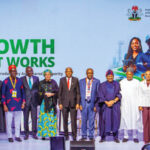
Executive Secretary of the National Sugar Development Council (NSDC), Kamar Bakrin, made this case at the 32nd Nigerian Economic Summit in Abuja, where he linked the federal government’s economic reforms to the growing attractiveness of local sugar production.
Speaking during a panel discussion on ‘Strengthening Policy Coordination for the Non-Alcoholic Drink Sector Competitiveness,’ Bakrin said the reforms had brought greater stability to the economy, creating an opportunity to move towards broader economic growth.
“The reforms have brought stability to the economy. The next step is to turn stability into growth that works for ordinary Nigerians,” he said.
His position reflects a wider economic challenge: translating macroeconomic adjustments into productive investment and improved livelihoods. Bakrin identified youth unemployment, rural livelihoods, insecurity, foreign exchange pressures, food security and the rising cost of living as competing priorities requiring coordinated policy responses.
He argued that the sugar industry could contribute to addressing several of these challenges because of its extensive agricultural and industrial value chain.
“Our contribution as a council is to make sure that, when those choices are made, the full economic picture of the sugar value chain is on the table. This is because very few sectors touch all of these priorities at once the way sugar does,” he said.
The industry’s economic significance extends beyond sugar production. Bakrin described the sugar and beverage industries as an interconnected value chain, beginning with sugarcane cultivation and extending to the manufacture of bottled drinks.
He identified the beverage industry as Nigeria’s largest industrial consumer of sugar, arguing that stronger domestic production would improve the competitiveness of beverage manufacturers by supporting local sourcing and reducing exposure to imported inputs.
The economic projections under the Nigeria Sugar Master Plan 2.0 further illustrate the sector’s potential. According to Bakrin, achieving self-sufficiency could save Nigeria approximately $1 billion annually in foreign exchange and generate about 110,000 direct jobs.
Most of these employment opportunities, he said, would emerge in rural communities through sugar estates, processing mills and outgrower farms.
The expansion could also stimulate infrastructure development in host communities, including roads, schools, healthcare facilities and electricity.
However, these projected benefits will depend on the industry’s ability to expand domestic cultivation, attract long-term investment and establish efficient processing capacity. Sugar production requires substantial investment in land development, irrigation, infrastructure and industrial facilities. Policy consistency and coordination across agriculture, trade, energy and manufacturing will therefore remain important.
The connection between sugar production and beverage manufacturing also raises the importance of a reliable domestic supply. Local manufacturers require consistent access to competitively priced inputs to sustain production and remain competitive.
Bakrin’s intervention at the summit therefore places the sugar industry within a broader conversation about economic diversification and industrial development.
The opportunity is not simply to produce more sugar locally, but to build a value chain capable of retaining foreign exchange, creating jobs and supporting manufacturing growth.
Whether the projections under Sugar Master Plan 2.0 translate into measurable economic gains will ultimately depend on implementation, investment and the ability to move from policy ambition to sustained domestic production.