
By Majeed Salaam
Nigeria’s effort to attract global capital is increasingly shifting from promoting its economic potential to demonstrating why international investors should consider its markets and productive sectors.
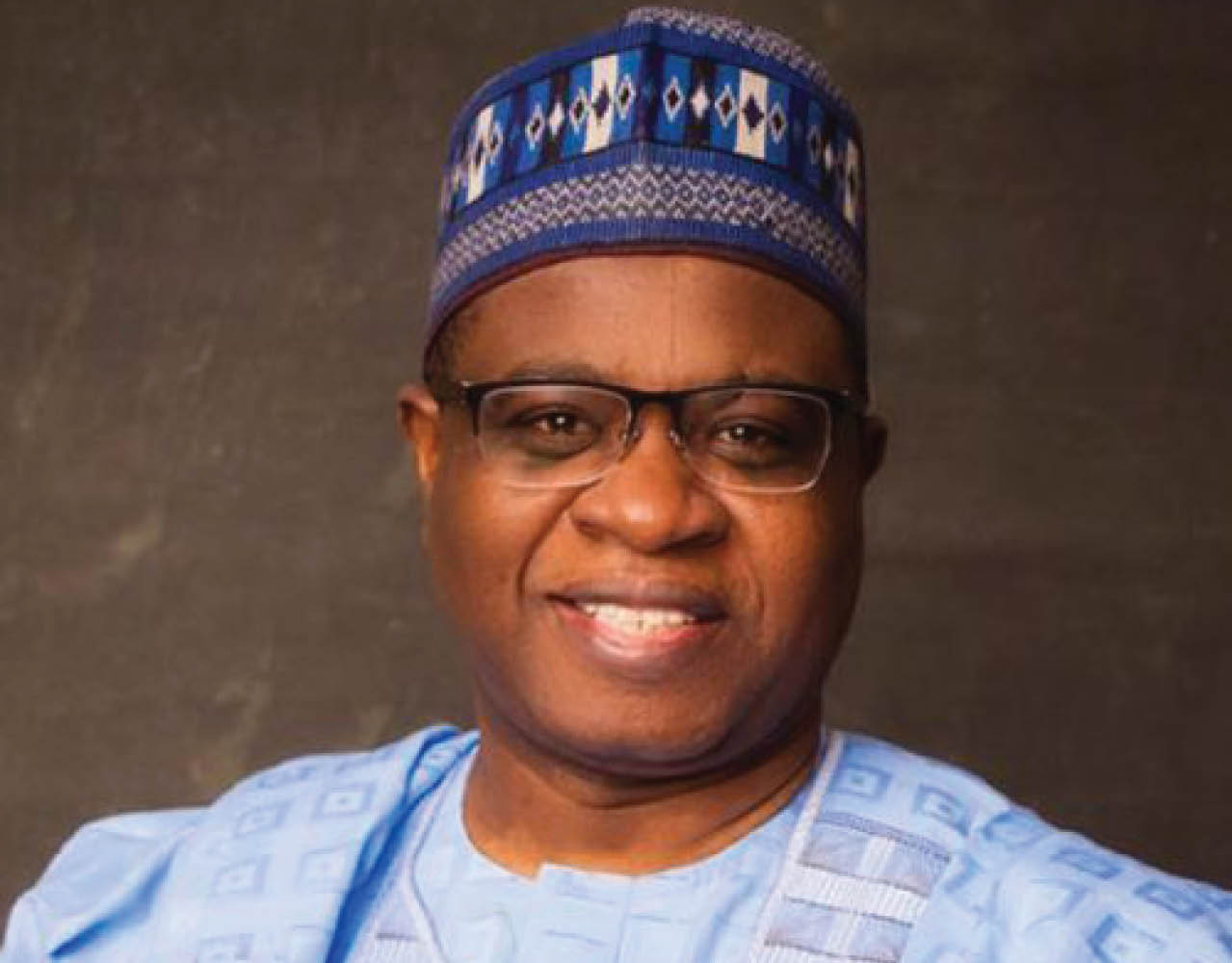
That message was central to the Nigeria Investment Forum held on the sidelines of the 81st United Nations General Assembly in New York, where Chairman of Nigerian Exchange Group (NGX) , Dr. Umaru Kwairanga, presented the country’s capital market as a channel through which international investors can participate in its economic expansion.
Dr. Kwairanga argued that Nigeria’s investment proposition has changed significantly over the past three years, pointing to what he described as a lower country risk profile and comparatively attractive returns.
“In considering where to invest, investors must weigh risk and return. Nigeria’s country risk profile is considerably lower than it was three years ago while the returns available remain some of the highest in the world and they are sustainable,” he said.
The statement represents an assessment from the NGX chairman rather than a standalone measure of investment risk. Nevertheless, it captures the broader argument being presented to international capital: that Nigeria’s recent economic reforms are beginning to reshape the environment in which businesses and investors operate.
Dr. Kwairanga cited the removal of fuel subsidies, the move away from multiple exchange-rate regimes, changes in monetary policy and tax reforms as developments that have affected the macroeconomic and business environment.
He said the changes had also been reflected in the capital market.
“That has had a knock-on effect on the Nigerian capital market which has seen double digit growth every year since 2023,” he said.
For the NGX, the objective is not simply to increase trading activity. The exchange sees its role within a broader capital-formation system in which savings are channelled towards businesses and productive sectors while companies gain access to long-term financing.
Dr. Kwairanga said this depends fundamentally on investor confidence.
“Capital moves towards opportunity, but it remains where investors have confidence in the institutions and systems supporting their investments,” he said.
That confidence, he stated, depends on credible regulation, governance, transparency, market integrity and infrastructure capable of supporting efficient transactions.
The emphasis on institutional confidence is important for Nigeria because attracting foreign capital involves more than presenting large opportunities. Investors also need mechanisms through which they can enter and exit markets, assess companies, protect their interests and repatriate returns.
Dr. Kwairanga pointed to Nigeria’s natural resources, including crude oil and solid minerals, as well as its agricultural potential and large population, as areas capable of supporting long-term economic growth.
But the investment case being presented at the forum also extends beyond natural resources. He identified infrastructure, solid minerals, large-scale agriculture, fintech and tourism as areas where venture capital, private equity and institutional investors could participate.
The capital market itself is another part of that proposition. Dr. Kwairanga said the NGX had recorded growth in market capitalisation, trading volumes and values in recent years, while millions of new investors had been onboarded through trading licence holders and digital initiatives such as NGX Invest.
He also pointed to the growing number of companies accessing the exchange for capital raising, citing the ongoing Dangote Refinery Initial Public Offering (IPO) as a major recent development.
According to him, the offering is setting records for capital raised and subscriber numbers on the African continent. Such claims relate to the current offering and should ultimately be assessed against final transaction and market data.
The broader objective is to make the Nigerian capital market more accessible to both institutional and individual investors. Dr. Kwairanga said more than 300 securities are listed across the exchange’s premium and main boards, while more than 150 investment firms operate as trading licence holders.
For foreign investors, the presence of local intermediaries could help bridge some of the information and market-access gaps that often affect investment decisions in emerging markets.
The NGX chairman also argued that foreign capital brings benefits beyond financing.
“Foreign capital brings more than financing; it can also bring expertise, technology, global networks, institutional discipline and access to international markets,” he said.
That makes the quality of capital as important as its volume. Investment that supports productive enterprises, infrastructure and export capacity can potentially deepen the economy’s capacity to generate future growth, while capital-market participation can broaden ownership of businesses and financial assets.
Kwairanga acknowledged that Nigeria still has work to do in strengthening the institutions and partnerships needed to convert its resources and economic opportunities into scalable investments.
His appeal to international investors therefore rests on a proposition that goes beyond Nigeria’s familiar narrative of untapped potential. The argument is that reforms, capital-market development and a large domestic economy can increasingly provide channels through which that potential becomes investable.