
For decades, Nigeria’s economic conversation has revolved around a familiar set of priorities: oil revenues, infrastructure deficits, foreign exchange challenges and industrial diversification. Yet amid these longstanding concerns, a new opportunity is beginning to emerge from an unexpected direction.
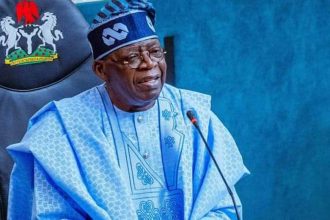
The administration of President Bola Ahmed Tinubu is now placing strategic attention on the halal economy, a global market that spans food production, livestock, pharmaceuticals, cosmetics, tourism, logistics, finance and lifestyle services. The federal government believes the sector could become an important contributor to economic growth, export earnings and job creation in the years ahead. Enam Obiosio writes…
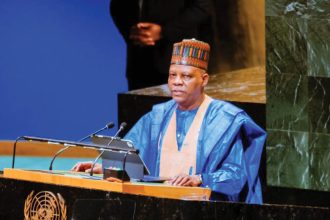
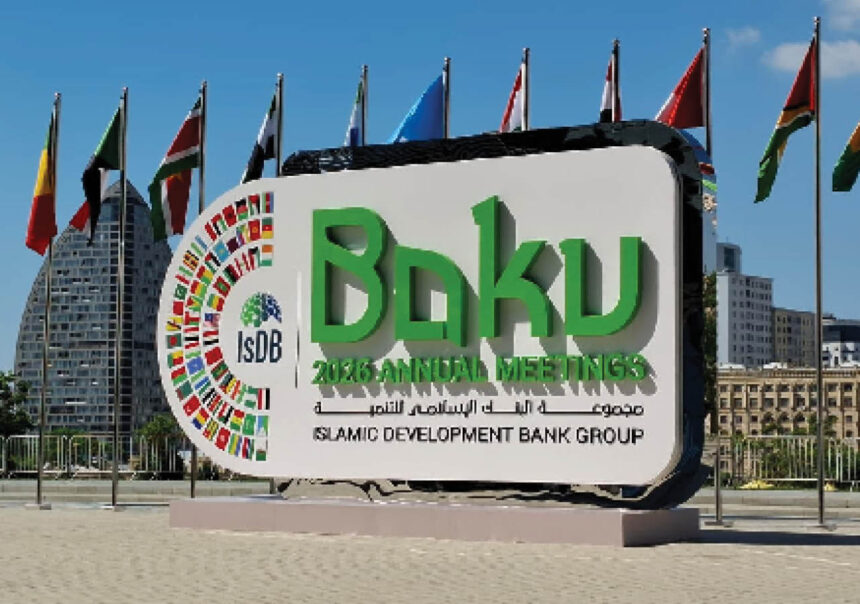
Speaking on the sidelines of the Islamic Development Bank (IsDB) Group Annual Meeting in Baku, Azerbaijan, the Deputy Chief of Staff to the President in the Office of the Vice President, Senator Ibrahim Hassan Hadejia, outlined the administration’s vision for developing a comprehensive halal ecosystem in Nigeria.
His remarks reveal a broader economic calculation. Beyond its religious origins, the halal economy has evolved into one of the world’s fastest-growing commercial sectors, attracting participation from countries with little or no Muslim majority populations. Nations such as Australia, Brazil, New Zealand and the United States have successfully positioned themselves as major suppliers to global halal markets, generating billions of dollars annually from exports.
Nigeria believes it can do the same.
From Religious Niche To Global Business
One of the biggest misconceptions surrounding the halal economy is that it serves only Muslim consumers. While the sector originated from Islamic dietary and ethical standards, its appeal has expanded significantly over the past two decades.
Today, halal-certified products are often associated with quality assurance, safety standards, ethical sourcing and traceability. Consumers across different faiths increasingly purchase halal products because they view them as meeting strict production and hygiene requirements.
This transformation has turned halal into a mainstream global business category.
According to Sen. Hadejia, the sector is rapidly approaching a market value of seven trillion dollars globally. Whether in food processing, pharmaceuticals, cosmetics, fashion or tourism, halal certification has become a gateway into some of the world’s fastest-growing consumer markets.
For Nigeria, this represents both a challenge and an opportunity.
The challenge lies in building the institutional structures required to participate competitively. The opportunity lies in the country’s existing demographic and agricultural advantages.
“Nigeria, without any effort, is the seventh-largest halal consumer country in the world and the second-largest in Africa,” Sen. Hadejia noted.
That statistic alone presents a compelling case. Few countries begin with a large domestic market already consuming products that fit within the halal value chain. Nigeria does.
The Livestock Advantage
Perhaps the strongest pillar of Nigeria’s halal ambitions lies in livestock production.
The creation of the Federal Ministry of Livestock Development by the President Tinubu’s administration was initially viewed as part of broader agricultural reforms. However, the government now see the ministry as a potential cornerstone of Nigeria’s entry into global halal markets.
Nigeria possesses one of Africa’s largest livestock populations, including cattle, sheep and goats. These resources provide a natural foundation for halal meat production and export.
Sen. Hadejia highlighted the strong demand for Nigerian livestock products in Middle Eastern countries, particularly Nigerian goat meat, which enjoys a reputation for its distinctive flavour.
Currently, much of this trade operates informally. Animals and livestock products often move through fragmented supply chains with limited certification, inadequate processing facilities and weak export infrastructure.
The government’s strategy seeks to formalise these activities.
Certification systems, modern abattoirs, logistics networks and export-oriented processing facilities could help Nigeria capture greater value from products already in demand internationally.
If successfully implemented, the economic benefits could extend well beyond farmers and livestock traders.
Entire value chains involving transportation, packaging, cold storage, veterinary services, processing plants and export logistics would emerge around the industry.
The MSME Dimension
Perhaps the most politically significant aspect of the government’s halal strategy is its emphasis on micro, small and medium enterprises.
Nigeria’s economic growth challenge is not merely increasing national output. It is ensuring that growth translates into jobs and opportunities for ordinary citizens.
This is where policymakers see halal development as different from many large-scale industrial projects.
According to Sen. Hadejia, the ecosystem is being designed from the ground up rather than from the top down.
The focus is on producers, processors, traders and small businesses operating at the grassroots level.
For rural communities, halal certification could create access to premium markets. For small manufacturers, it could open doors to export opportunities. For young entrepreneurs, it could create entirely new service industries ranging from packaging and branding to logistics and digital commerce.
In a country where unemployment and underemployment remain pressing concerns, such opportunities are particularly attractive.
The government’s economic inclusion agenda depends heavily on expanding participation in productive sectors. A functioning halal ecosystem aligns closely with that objective.
More than agriculture
Although livestock and food production dominate public discussions about halal markets, the global halal economy is far broader.
Islamic finance already represents a growing segment of Nigeria’s financial sector. Non-interest banking continues to expand, attracting customers seeking alternative financial products.
Sen. Hadejia noted that non-interest banking now accounts for a significant share of the Nigerian banking industry.
Beyond finance, opportunities exist in pharmaceuticals, cosmetics, hospitality and tourism.
Countries such as Malaysia and the United Arab Emirates have demonstrated how halal certification can support entire economic ecosystems that attract both domestic and international investment.
For Nigeria, diversification into these sectors could strengthen efforts to reduce dependence on crude oil exports.
The strategy fits neatly within the administration’s broader economic reform agenda, which includes foreign exchange reforms, infrastructure development and efforts to improve the business environment.
The Infrastructure Test
Yet ambition alone will not guarantee success. The biggest challenge facing Nigeria’s halal aspirations may not be market demand but execution.
Export competitiveness depends on infrastructure. Roads, ports, storage facilities, energy supply and regulatory efficiency all influence whether producers can compete internationally.
Sen. Hadejia acknowledged this reality when discussing the administration’s infrastructure investments.
He argued that ongoing road projects across the country would significantly reduce logistics costs over the next few years.
The impact could be substantial. One of the key drivers of food inflation in Nigeria is transportation. Moving agricultural products from producing regions to consumer markets remains expensive and inefficient.
If transport costs decline, agricultural producers could become more competitive domestically and internationally. The halal economy cannot thrive without these supporting reforms.
It is not simply a certification exercise. It requires an entire economic ecosystem capable of delivering products efficiently and consistently to global markets.
IsDB and The Financing Factor
Another important element in the government’s strategy is its relationship with the IsDB.
Hadejia commended the institution for providing financing that is often less expensive and less complex than traditional multilateral lending arrangements.
His comments reflect growing interest among policymakers in alternative financing mechanisms based on risk-sharing principles.
As Nigeria seeks funding for infrastructure, agricultural development and industrial expansion, institutions such as the IsDB may play an increasingly prominent role.
For sectors like halal development, access to affordable financing could prove decisive.
Small businesses, processors and exporters require capital to expand operations and meet international standards. Without financing, even the most promising economic opportunities often fail to scale.
A Moment Of Possibility
The President Tinubu administration’s focus on the halal economy represents more than a niche policy initiative. It reflects a broader search for new pathways to economic growth.
Nigeria’s advantages are undeniable. A large domestic market, abundant livestock resources, strategic geographic position and expanding entrepreneurial base provide a strong starting point.
Yet success will depend on execution. Certification frameworks must be credible. Infrastructure must improve. Export standards must be enforced. Financing must reach businesses that need it most.
If these conditions are met, the halal economy could become one of Nigeria’s most significant non-oil growth stories over the coming decade.
For a country seeking diversification, foreign exchange earnings and job creation, the opportunity is difficult to ignore.
The real test begins now.