
For years, Nigeria’s oil sector symbolised the gap between potential and performance. Despite possessing some of Africa’s largest hydrocarbon reserves, the country consistently struggled to meet its Organisation of the Petroleum Exporting Countries (OPEC) production targets, weighed down by crude oil theft, pipeline vandalism, ageing infrastructure, operational disruptions and declining investor confidence. recently, however, new production data suggest that the industry may be entering a different phase. Nigeria, under the administration of President Bola Ahmed Tinubu, has not only exceeded its OPEC production quota but has also recorded its highest crude oil output in 15 months, raising an important question for policymakers and investors alike: is this a temporary recovery or the beginning of a more durable resurgence in the country’s most strategic revenue-generating sector? Enam Obiosio writes.
The latest figures released by the Nigerian Upstream Petroleum Regulatory Commission (NUPRC) indicate that Nigeria’s crude oil production averaged 1,530,354 barrels per day in May 2026, representing 102 percent of the country’s OPEC quota of 1.5 million barrels per day.
When condensate production of 170,446 barrels per day is added, total oil output reached 1,700,800 barrels per day, further consolidating Nigeria’s position as Africa’s largest oil producer.
The figures were disclosed in a statement issued by the Head of Media and Corporate Communications at the NUPRC, Eniola Akinkuotu, who described the performance as evidence of sustained improvements across the country’s upstream petroleum operations.
According to the commission: “Nigeria’s oil production witnessed an upswing in May 2026, averaging 1,530,354 barrels of crude oil and 170,446 barrels of condensates per day, bringing the total combined production to 1,700,800 barrels per day and consolidating Nigeria’s position as Africa’s largest oil producer.
“The average crude oil production recorded during the month of May represents 102 percent of Nigeria’s 1.5 million barrels per day production quota allocated by the Organisation of the Petroleum Exporting Countries.”
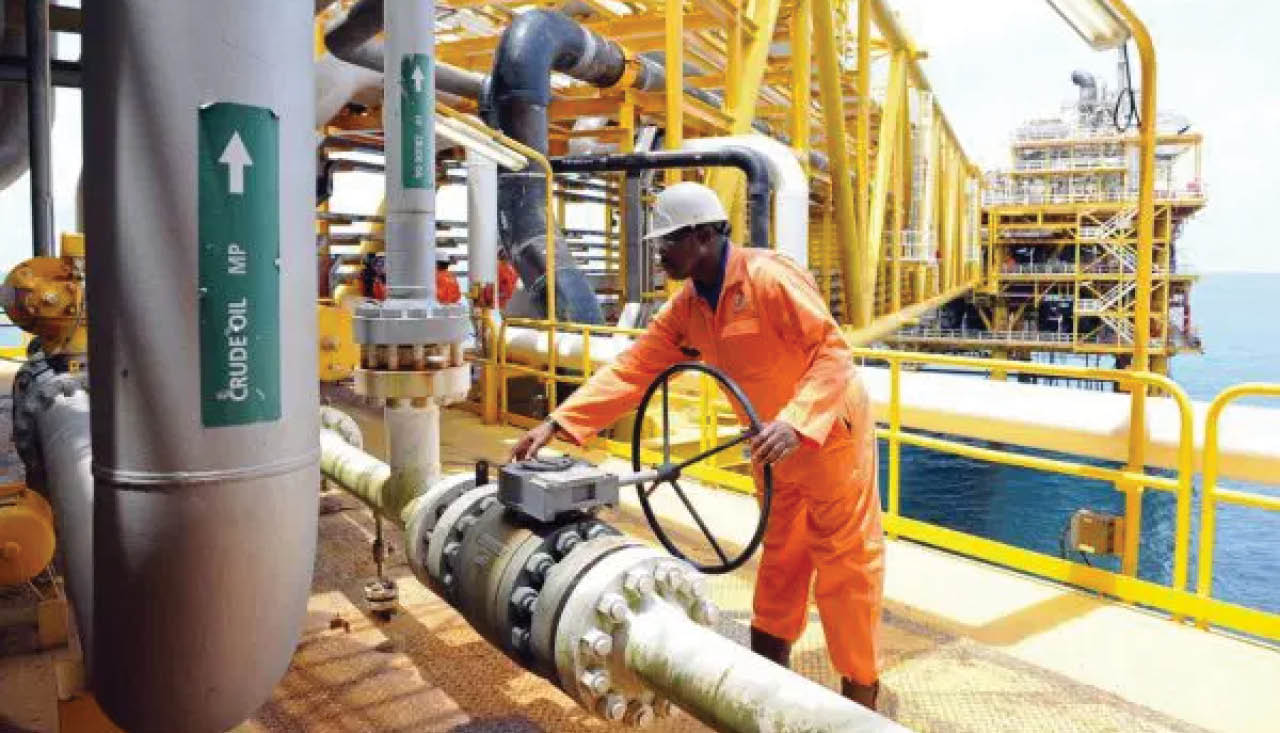
Beyond surpassing the OPEC quota, the significance of the May figures lies in the production trend they reveal. The data point to an industry that has gradually regained operational momentum after years of instability.
According to the commission, production remained stable throughout the month, with combined crude oil and condensate output fluctuating between a low of 1.51 million barrels per day and a peak of 1.86 million barrels per day.
“Production performance during the review period remained robust, with combined crude oil and condensate output ranging between a low of 1.51 million barrels per day and a peak of 1.86 million barrels per day,” the commission stated.
A closer examination of the figures reveals the scale of the recovery. The combined output of 1,700,800 barrels per day represents the highest level recorded since July 2025, when production reached 1,712,282 barrels per day.
More importantly, the crude oil component alone reached 1.53 million barrels per day, the strongest performance since January 2025 when output stood at 1.538 million barrels per day.
This makes May 2026 Nigeria’s highest crude oil production month in 15 months. The achievement becomes even more significant when viewed against recent production history. Nigeria’s output has steadily improved over the last several months.
Combined crude oil and condensate production stood at approximately 1.48 million barrels per day in February 2026 before increasing to 1.54 million barrels per day in March. Production climbed further to 1.66 million barrels per day in April and eventually reached 1.70 million barrels per day in May.
In crude oil terms alone, production increased by 2.77 percent month-on-month from the 1.48 million barrels per day recorded in April 2026.
The NUPRC said this upward trajectory reflects growing operational efficiency and improved reliability across the upstream segment of the industry.
The production data also provide insight into the facilities currently driving Nigeria’s oil recovery.
Bonny Terminal emerged as the country’s largest producing stream during the month, delivering 293,870 barrels per day. Closely behind was Forcados Terminal with 289,900 barrels per day.
Qua Iboe ranked third after producing 173,360 barrels per day, while Escravos Oil Terminal contributed 135,470 barrels per day.
Odudu, also known as the Amenam Blend, completed the top five production streams with daily output of 63,250 barrels.
Collectively, these major terminals formed the backbone of Nigeria’s improved production performance, underscoring the importance of maintaining uninterrupted operations across critical export infrastructure.
Perhaps the most revealing aspect of the NUPRC report is the explanation behind the increase.
Unlike previous periods when production gains were often offset by disruptions, the commission attributed the latest performance largely to operational stability.
According to the regulator, there were no major pipeline breaches or facility shutdowns during the reporting period, allowing operators to sustain production across key assets.
“The rise in production is attributable to sustained positive momentum as operations remained stable throughout the reporting period, with no significant pipeline or facility outages recorded,” the statement noted.
The commission added that planned maintenance programmes had also been completed successfully.
“Additionally, all previously scheduled turnaround maintenance activities had been successfully completed, contributing to improved operational reliability and production efficiency.”
These developments suggest that recent government and industry efforts aimed at combating oil theft, protecting infrastructure and improving asset integrity may finally be producing measurable outcomes.
For Nigeria’s economy, the implications extend beyond the oil fields.
Higher production levels could provide a meaningful boost to government revenues, support foreign exchange earnings and strengthen fiscal performance at a time when authorities are pursuing economic reforms and seeking additional resources to fund development priorities.
Oil remains the country’s largest source of export earnings and one of its most important contributors to public finances. Consequently, every increase in production has direct implications for budget execution, foreign reserves and macroeconomic stability. Yet the latest achievement also highlights the challenge ahead.
Nigeria’s history of production volatility demonstrates that recovery alone is not enough. The more difficult task is sustaining it.
The country has repeatedly fallen below its OPEC allocation in recent years because of crude oil theft, pipeline vandalism, ageing infrastructure, underinvestment and recurring operational disruptions. While current trends suggest that some of these challenges are being addressed, the durability of the gains remains uncertain.
Maintaining production above the OPEC quota will require continued vigilance against theft and sabotage, ongoing infrastructure investments, successful execution of upstream projects and policies capable of attracting fresh domestic and international capital into the sector.
The May 2026 production figures therefore represent more than a statistical milestone. They offer evidence that Nigeria’s oil industry can perform at levels long considered achievable but increasingly elusive. Whether the country can convert this recovery into a sustained period of growth will determine not only the future of its petroleum sector but also the strength of its broader economic outlook in the years ahead.